
Neighborhood Report
Coral Gables, Florida
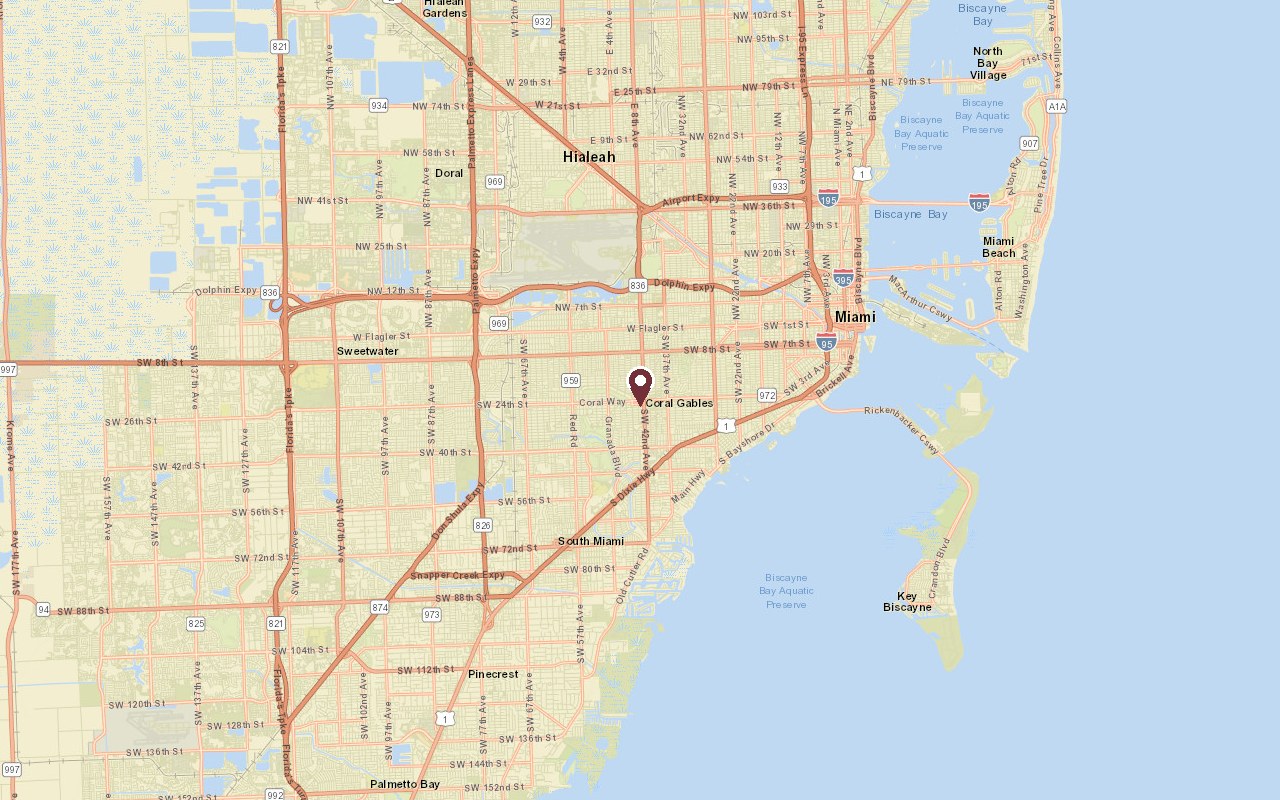
The planned city that kept its plan: George Merrick built a Mediterranean Revival city under a banyan canopy in the 1920s, with plazas, grand entrances, a quarry turned swimming pool and a downtown where every shop sat within a two block walk, about seven miles southwest of downtown Miami.
The short version
Coral Gables, Miami-Dade County
The planned city that kept its plan: George Merrick built a Mediterranean Revival city under a banyan canopy in the 1920s, with plazas, grand entrances, a quarry turned swimming pool and a downtown where every shop sat within a two block walk, about seven miles southwest of downtown Miami.

At a Glance
Florida cost notes. Florida levies no state personal income tax, a saving that partly offsets the carrying costs at Coral Gables prices. The combined sales tax in Coral Gables is 7 percent in 2026, the 6 percent state rate plus a 1 percent Miami-Dade charter county surtax. The City of Coral Gables millage rate is 5.559 mills, and the median property tax bill in Miami-Dade County is $3,841, though Gables houses assessed near the median sale price will sit well above that county median. Homeowner insurance belongs in every budget here: South Florida premiums run among the highest in the country, and wind coverage is a line item of its own.
The Story
Coral Gables began as a family farm. Solomon Merrick, a Congregational minister from Massachusetts, bought a 160 acre homestead west of Miami in 1899 and planted citrus, guava and avocado groves in the coral rock. His son George grew up working that land. George Merrick wanted a law career in Manhattan; his mother Althea urged him to stay and work the farm instead, and he stayed. He sold real estate, studied how planned communities were built, and in 1921, through the Coral Gables Corporation, he began turning the family groves and thousands of surrounding acres into a city drawn before it was built.
See moreSee less
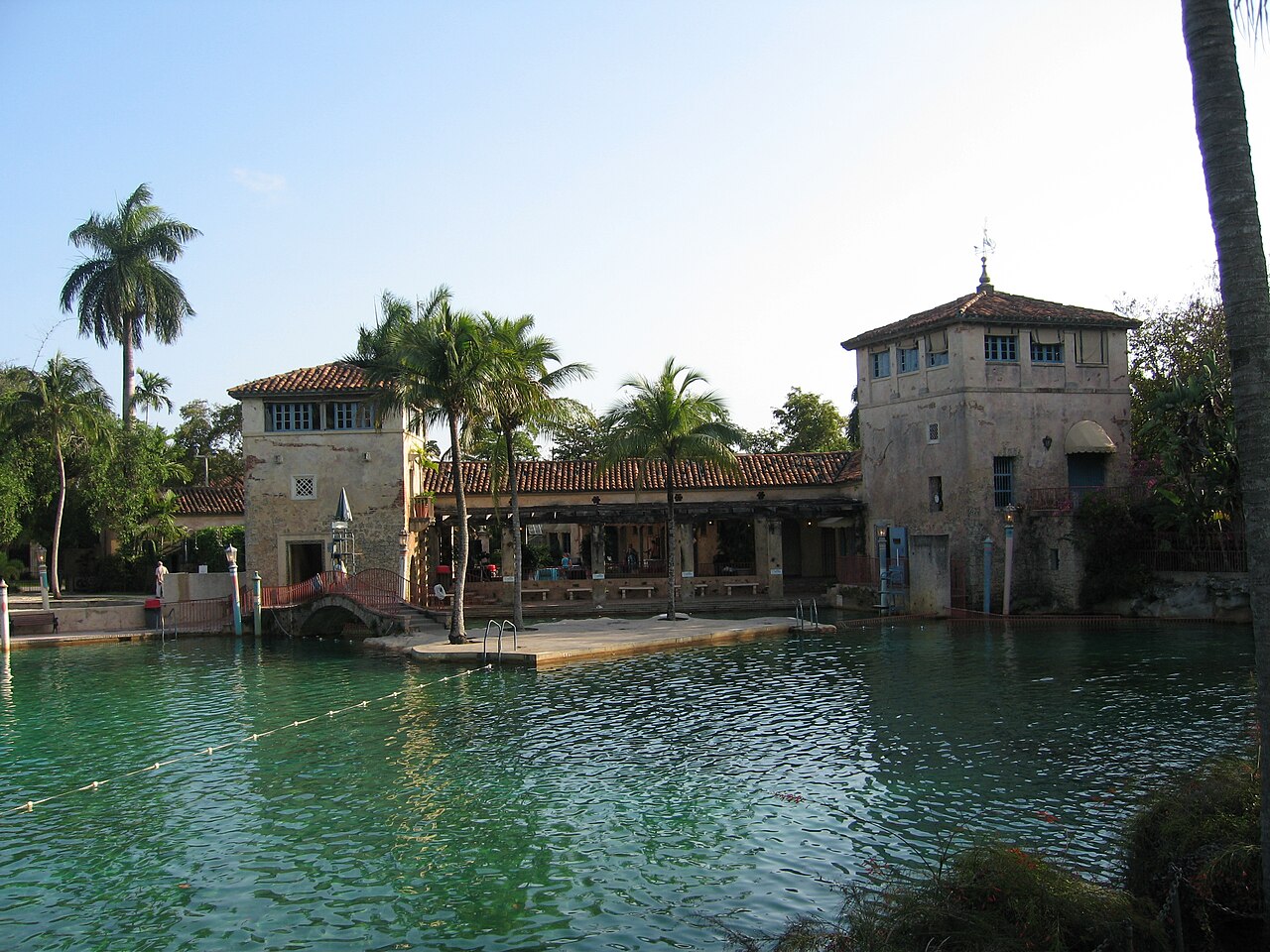
The plan was total. With his uncle Denman Fink as artistic advisor, Merrick laid out plazas, fountains, canals, golf courses and grand entrances, and set Mediterranean Revival as the house style, enforced through strict zoning that still governs roofs, paint and additions a century later. Downtown was drawn compact, so every business sat within a two block walk. In 1924 the city opened the Venetian Pool in a worked out coral limestone quarry, a spring fed lagoon with waterfalls and a casino island. Coral Gables incorporated on April 30, 1925, with 29 voters casting ballots. The same year, the University of Miami was chartered on land Merrick and his backers pledged.
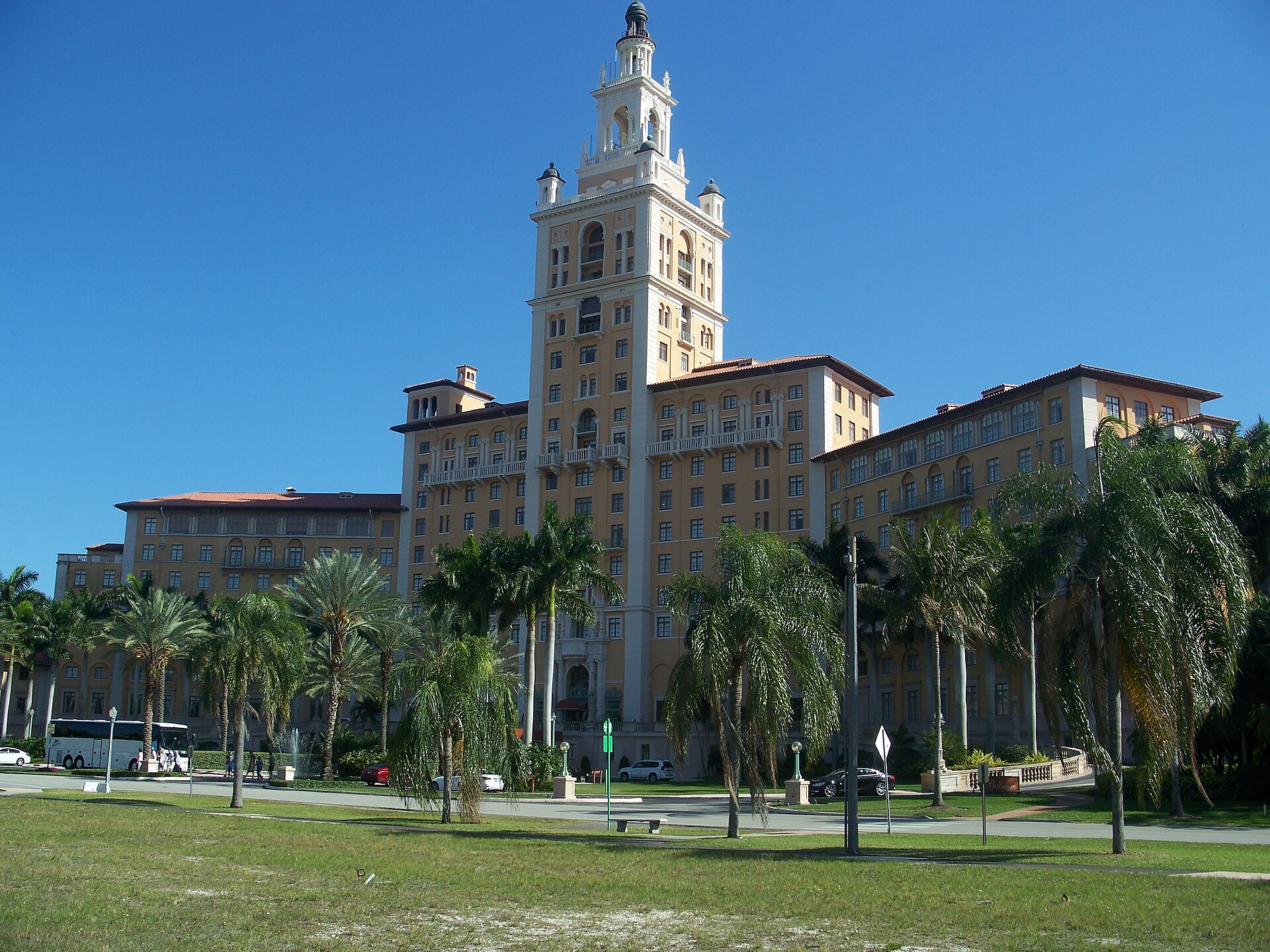
The centerpiece arrived on January 15, 1926: the Miami Biltmore Hotel, built by Merrick with the Bowman hotel group, its tower modeled on the Giralda in Seville, its swimming pool the largest in the United States, with Johnny Weissmuller on staff as a swimming instructor. Around the same years Merrick commissioned his themed villages, seven small enclaves built between 1925 and 1928 in the styles of other places: a Chinese Village, French Normandy and French City villages, a Dutch South African village, an Italian village. They were marketing, and they were also the plan made visible, proof that the whole world could be rebuilt in coral stone inside one Florida city.
Then the weather turned. The hurricane of September 18, 1926 tore through South Florida and the land boom broke. Sales stalled, the city defaulted on its bonds around 1929, the Coral Gables Corporation went bankrupt, and Merrick lost the fortune and the city he had made. He spent his later years running a fishing camp in the Keys, then working as a postmaster in Fernandina Beach, where he died on March 16, 1942. The city he drew survived him: the Biltmore served as an Army hospital from 1942 and reopened as a hotel in 1987, and the Venetian Pool joined the National Register of Historic Places in 1981. The planner lost everything except the plan, and the plan is the part you can still walk through today.

Timeline
- 1899: Solomon Merrick buys a 160 acre homestead west of Miami and plants groves in the coral rock.
- 1910: The Merrick family builds Merrick House at 907 Coral Way, now a city museum.
- 1921: George Merrick forms the Coral Gables Corporation and begins building his planned city.
- 1924: The Venetian Pool opens in a former coral limestone quarry.
- April 30, 1925: Coral Gables incorporates, with 29 voters casting ballots.
- 1925: The University of Miami is chartered on land pledged by Merrick and his backers.
- January 15, 1926: The Miami Biltmore Hotel opens, its tower modeled on the Giralda in Seville.
- September 18, 1926: A major hurricane strikes South Florida and the Florida land boom breaks.
- 1925 to 1928: Seven themed villages are built across the city, from the Chinese Village to the French Normandy Village.
- 1929: The city defaults on its bonds; Merrick loses his fortune and his role in the city.
- March 16, 1942: George Merrick dies in Fernandina Beach, working as a postmaster; the Biltmore becomes an Army hospital the same year.
- 1981: The Venetian Pool joins the National Register of Historic Places.
- 1987: The Biltmore reopens as a hotel.
What It Actually Feels Like
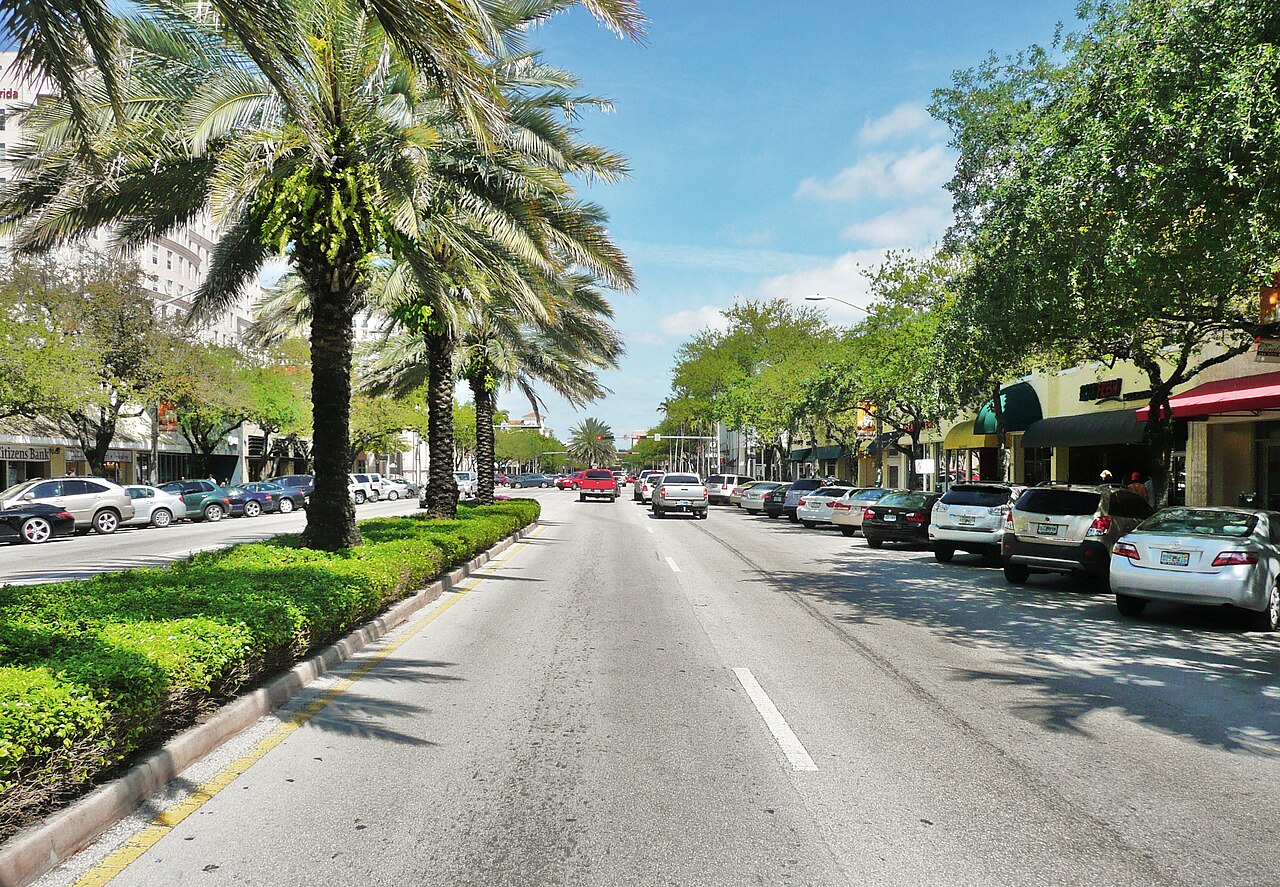
The canopy comes first. Banyans, mahogany and royal poincianas arch over the older streets until whole blocks sit in green shade, and the houses behind the hedges wear coral stone, barrel tile and arched loggias because the code asks them to. Mornings belong to the Granada and Biltmore golf courses and to walkers circling the Venetian Pool before the gates open. Midday moves downtown, where Miracle Mile and the pedestrian stretch of Giralda Plaza fill with office workers, bridal parties shopping the Mile famous row of bridal salons, and long lunches that run on a Mediterranean clock. Evenings settle into the villages and the quieter sections, where the streets were drawn a century ago for front gardens and low walls, and the loudest thing is a peacock from the older neighborhoods near the bay. It feels less like a suburb of Miami than like a small, self assured city that Miami grew up around.

Pros and Cons
Pros
- A complete planned city from the 1920s, still governed by the design code that created it: Mediterranean Revival streets, plazas, entrances and themed villages unlike anywhere else in Florida.
- A real downtown: Miracle Mile and Giralda Plaza carry shopping, dining and offices, with a Walk Score of 99 at the Miracle Mile core.
- Landmark amenities inside the city limits: the Biltmore Hotel, the Venetian Pool, two golf courses, the University of Miami and the Coral Gables Museum.
- Homes sell at 95.2 percent of asking and take a median of about 98 days to sell, up from 78 days a year earlier, so buyers have time and negotiating room rare in South Florida trophy markets.
- No state income tax, and downtown Miami, Brickell and the airport all sit within a short drive.
Cons
- The median sale price is $1,400,000 and average one bedroom rent is $2,652 a month; even the entry houses in the older sections start above $1,200,000.
- Homeowner and wind insurance in South Florida runs among the highest in the country, and older roofs can make coverage hard to place.
- Walkability drops fast outside the downtown core; most residential sections are car dependent, and getting downtown means a drive or a trip to the Metrorail stations at the city edge.
- The design code cuts both ways: renovations, paint colors, roofs and additions go through city review, and historic houses carry the maintenance that comes with 1920s bones.
- Hurricane season is a standing fact of life, with storm shutters, flood maps and evacuation routes part of every household routine.
Housing in Detail
Entry: condos around downtown and along the edges, where a two bedroom at 525 Coral Way lists at $498,900, and garden apartments and older condo buildings near the University of Miami trade under the city median. Houses begin in the older northern sections, where a 1961 three bedroom on Capri Street lists at $1,250,000. Mid: the Granada, Crafts and Country Club sections, where renovated 1920s and 1940s houses on tree lined streets list between about $1,700,000 and $3,000,000, including a fully remodeled 1946 house on Cortez Street at $1,795,000 and new construction condos on Ponce de Leon Boulevard reaching $2,900,000. Top: the waterfront enclaves at the southern edge, Gables Estates, Cocoplum and Tahiti Beach, where estates list into eight figures. Renting clusters downtown and near the university, in the apartment buildings along Coral Way and Ponce de Leon.
Daily Life
Miracle Mile carries the errands and the ceremony: groceries, pharmacies, bookshops and the bridal row, with Giralda Plaza closed to cars and lined with restaurant tables. Merrick Park brings the luxury mall version a few blocks south. The Coral Gables Farmers Market sets up at City Hall on Saturdays in season, the public library sits downtown, and the free Coral Gables Trolley loops the core on weekdays. Weekends split between the Venetian Pool, the golf courses, University of Miami games and gallery nights on the Mile. For a city of about 50,000 people, the cultural bench runs deep: Actors Playhouse at the Miracle Theatre, Books and Books as the literary living room, and the museum in the old police and fire station telling the story of the plan itself.
Best For / Think Twice If
Best for: buyers who want architecture with rules behind it and a century of shade overhead; families drawn by the university, the schools and the golf course streets; downtown workers who want a main street life at the core and a short drive to Brickell; anyone leaving a high tax state who will feel the absence of a state income tax at this price level.
Think twice if: your budget needs a house under a million, which Coral Gables will rarely offer; you want to renovate freely, since the Board of Architects reviews what the street can see; you plan to live car free outside the downtown core; South Florida insurance quotes will make or break your monthly number, so price them before the house.
Top Properties Right Now
$1,250,000
1106 Capri St, Coral Gables, FL 33134
3 beds, 2 baths, 1,419 sq ft. Built 1961, 5,000 sq ft lot.
A one story house in the older northern sections, listed by Compass, with Coral Gables Preparatory Academy rated 10 out of 10 about a mile away.
Listing verified on Redfin, October 17, 2026. View on Redfin
$1,795,000
831 Cortez St, Coral Gables, FL 33134
3 beds, 3 baths, 2,002 sq ft. Built 1946, 0.18 acre corner lot.
A fully remodeled Granada Section house with a tropical courtyard and a chef kitchen, with an open house scheduled October 18, 2026; price reduced from $1,998,000 in September 2026.
Listing verified via the brokerage listing page, October 17, 2026. View the brokerage listing
$2,900,000
3000 Ponce De Leon Blvd Unit 602, Coral Gables, FL 33134
Condo, 2 full baths and 1 half bath. HOA dues $1,352 per month.
New construction on Ponce de Leon Boulevard in the Crafts Section, listed by One Sotheby's International Realty, with impact glass and a den in the plan.
Listing verified on Redfin, October 17, 2026. View on Redfin
Nearby Alternatives
- Coconut Grove: Miami oldest neighborhood, just east over the ridge, with a village center, marinas and a looser, leafier feel at slightly lower prices.
- South Miami: south along Red Road, a smaller downtown around Sunset Drive, the university other flank, and family streets at a step down in price.
- West Miami and the Roads: northeast toward Brickell, modest 1940s houses on quiet grids for buyers who want the Gables commute without the Gables code.
- Pinecrest: further south, big lots and top rated schools in a village setting, trading the planned architecture for space.
Sources
Data as of the dates shown above. Refresh due within 90 days for listings and 6 months for market data.
- Redfin housing figures as reported by MiamiHal, September 29, 2026: miamihal.com; Realty.com, Coral Gables MLS statistics, September 2026: realty.com
- Apartments.com, Coral Gables Section local guide, average one bedroom rent, March 2026: apartments.com
- Walk Score data for Coral Gables, citywide and Miracle Mile, via Kurby, updated March 13, 2026: kurby.ai
- Miami and Beaches (Greater Miami Convention and Visitors Bureau), how to get to Coral Gables, distance and Metrorail time; Wanderlog, Coral Gables to Miami drive, 2026
- U.S. Census Bureau, American Community Survey 2024 one year estimates via DataUSA, Coral Gables city, units in structure and tenure: datausa.io
- Florida Department of Revenue (no state personal income tax; 6 percent state sales tax); Miami-Dade County charter county surtax 1 percent; City of Coral Gables millage 5.559 mills; Miami-Dade County median property tax bill $3,841.
- City of Coral Gables, Venetian Pool history (opened 1924, former coral limestone quarry, National Register 1981): coralgables.com
- City of Coral Gables, Miracle Mile history (Merrick downtown plan): coralgables.com
- University of Miami, university history (chartered 1925): miami.edu
- Coral Gables Museum and HistoryMiami Museum, George Merrick and city history (Solomon Merrick 1899 homestead, incorporation April 30, 1925, themed villages, the 1926 hurricane, Merrick death March 16, 1942, Biltmore Army hospital and 1987 reopening).
- Redfin, 1106 Capri St listing, October 17, 2026: redfin.com listing page
- Brokerage listing page, 831 Cortez St (MLS A12064051, Status Active, open house October 18, 2026), October 17, 2026: brokerage listing page
- Redfin, 3000 Ponce De Leon Blvd Unit 602 listing, October 17, 2026: redfin.com listing page
- Ebyabe, The Biltmore Hotel, Coral Gables (hero photograph), Wikimedia Commons, CC BY-SA 3.0: commons.wikimedia.org
- Jesper Rautell Balle, Venetian Pool, Coral Gables (story photograph), Wikimedia Commons, CC BY 3.0: commons.wikimedia.org
- Averette, Miracle Mile in Coral Gables, 2010 (photograph), Wikimedia Commons, CC BY 3.0: commons.wikimedia.org