
Neighborhood Report
Lincoln Park, Chicago, Illinois
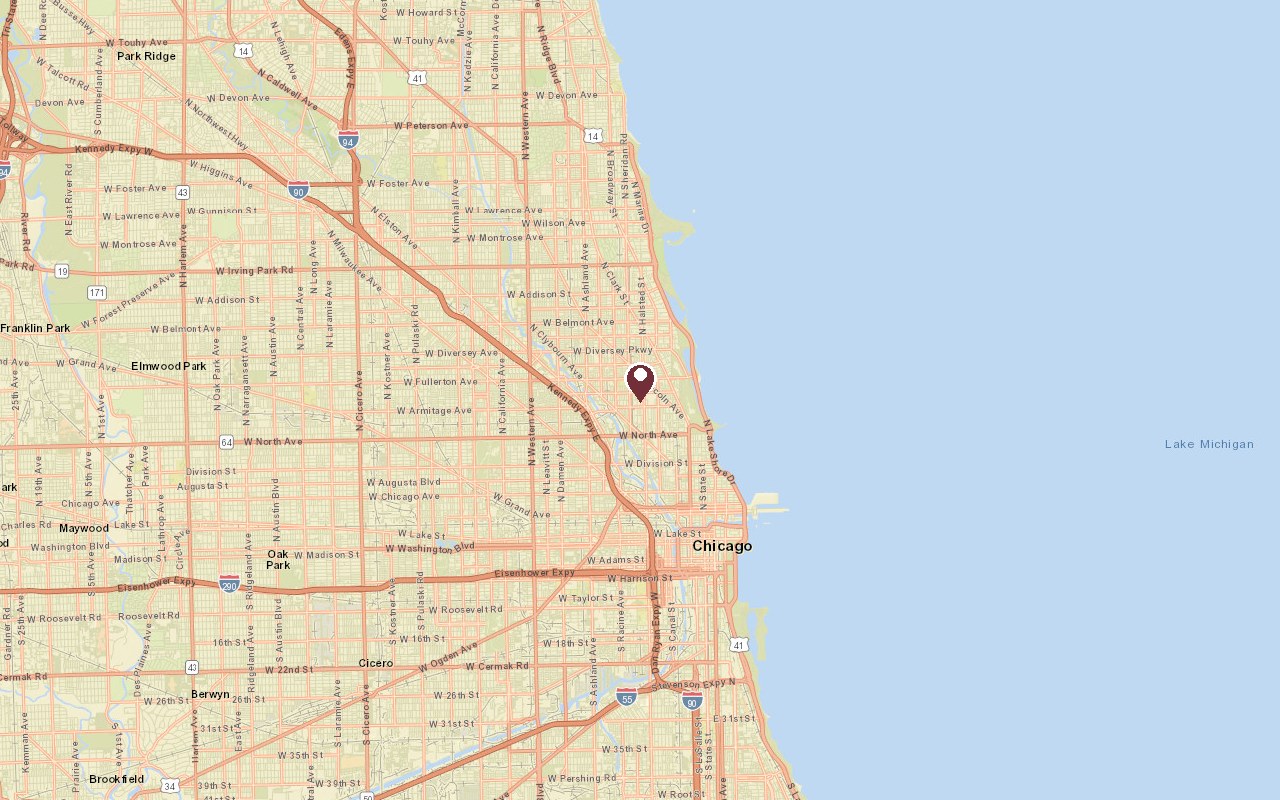
Lincoln Park is Chicago's lakefront all-rounder: a 1,208 acre park with a free zoo and a Victorian glass conservatory on one side, and on the other, brownstone and greystone streets where Armitage Avenue, Clark Street, and Lincoln Avenue carry the daily shopping, eating, and drinking, with the Loop about five miles south.
The short version
Lincoln Park, Chicago
Lincoln Park is Chicago's lakefront all-rounder: a 1,208 acre park with a free zoo and a Victorian glass conservatory on one side, and on the other, brownstone and greystone streets where Armitage Avenue, Clark Street, and Lincoln Avenue carry the daily shopping, eating, and drinking, with the Loop about five miles south.

At a Glance
Illinois cost notes. Illinois levies a flat 4.95 percent state income tax, and Chicago imposes no separate city income tax. Retirement income, including Social Security, pensions, and 401(k) and IRA distributions, is fully exempt from Illinois income tax. Chicago's combined sales tax is about 10.25 percent in 2026, 6.25 percent state plus city, county, and transit taxes, before a 2026 Cook County transit increase. Property taxes are the real budget item: the statewide effective rate is about 1.88 percent of assessed value (Tax Foundation, 2024 data, via AARP, March 2026), among the highest in the country, and Cook County rates vary widely by property, so price the tax bill with the house.
The Story
Lincoln Park began as a cemetery beside a lake. In 1837, the year Chicago was incorporated, the state allowed residents to use the land north of North Avenue for burials, and from 1843 the southern end served as Chicago's City Cemetery, holding an estimated 35,000 burials. Physicians and residents complained that a burial ground so close to a growing city was unsanitary, and in 1860 they petitioned to turn the ground into a public park. The sale of burial plots stopped, small improvements began, and on June 12, 1865, two months after Abraham Lincoln's assassination, the park was renamed Lincoln Park. The 1858 Couch Tomb, built for hotelier Ira Couch and too costly to move, still stands behind the Chicago History Museum as the last visible grave marker.
See moreSee less
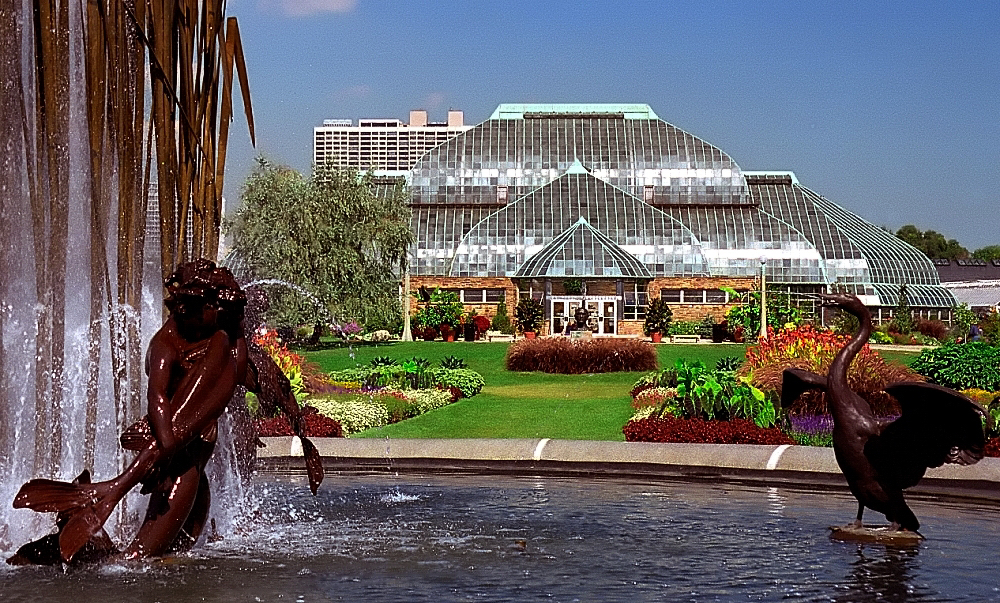
The park became the neighborhood's anchor, and the streets west of it filled in with the people Chicago kept absorbing. German immigrants farmed the meadows north of North Avenue in the 19th century. Southport and Clybourn became home to Kashubian immigrants from what is now northeastern Poland, who built St. Josaphat's parish in 1882 and completed its Romanesque Revival church in 1902, giving the pocket the names Jozafatowo and Kaszubowo. The Great Chicago Fire of 1871 burned north through the neighborhood to Fullerton Avenue, and the rebuilding that followed, under stricter codes inside the city and looser ones in Lake View Township just outside it, filled Arlington and Deming with the mansions and flats that still define those blocks. The zoo, founded in 1868 with two swans gifted from Central Park, the Conservatory, built 1890 to 1895, and the Lion House, built in 1912, gave the park its institutions. The original Ferris Wheel stood near Clark Street and Wrightwood Avenue from 1896 to 1903, and in 1934 the Biograph Theater on Lincoln Avenue became the place where John Dillinger was shot by federal agents after a film.
The human beat that best explains modern Lincoln Park belongs to the Puerto Rican Young Lords in the late 1960s. Lincoln Park had become home to Chicago's first Puerto Rican immigrants in the 1950s and 1960s, and under Jose Cha Cha Jimenez the Young Lords turned from a street gang into human rights activists for Latinos and the poor. They published newspapers, mounted sit-ins at Grant Hospital, Armitage Avenue Methodist Church, and McCormick Theological Seminary, and in 1969 joined residents in large demonstrations against the displacement of Puerto Ricans and the poor at Halsted and Armitage. Their history is now archived at DePaul University, in the neighborhood itself. A quieter beat runs alongside it: in 1954 the Lincoln Park Conservation Association was founded to stop the neighborhood's deterioration, and by 1956 urban renewal funds arrived to renovate old buildings and schools.

Timeline
- 1824: United States Army builds a small post near Clybourn and Armitage avenues.
- 1837: State permission to use land north of North Avenue as a cemetery, the year Chicago is incorporated.
- 1843 to 1866: Southern end serves as Chicago's City Cemetery, about 35,000 burials.
- 1858: Couch Tomb built for Ira Couch.
- 1860: Petition to repurpose the ground as a public park; burial plot sales cease.
- June 12, 1865: Park renamed Lincoln Park after Abraham Lincoln.
- 1868: Lincoln Park Zoo founded with two swans gifted from Central Park.
- 1871: Great Chicago Fire burns north to Fullerton Avenue.
- 1882: St. Josaphat's parish established for the Kashubian community.
- 1883: Bissell Street District flats built by Iver C. Zarbell.
- 1889: Lake View Township annexed by Chicago.
- 1890 to 1895: Lincoln Park Conservatory built.
- 1896 to 1903: Original Ferris Wheel near Clark Street and Wrightwood Avenue.
- 1902: St. Josaphat's Romanesque Revival church completed.
- 1912: Lion House opens at the zoo.
- 1934: John Dillinger shot outside the Biograph Theater.
- 1954: Lincoln Park Conservation Association founded.
- 1956: Urban renewal funds arrive.
- 1968: Confrontation between demonstrators and police during the Democratic National Convention week.
- 1969: Young Lords and residents demonstrate against displacement at Halsted and Armitage.
- September 5, 2007: Bissell Street District designated a Chicago landmark.
What It Actually Feels Like
Lincoln Park feels like two neighborhoods sharing one grid, and both are the point. Mornings belong to the park side: the Lakefront Trail, North Avenue Beach in summer, the zoo, and the Conservatory, with the skyline sitting south across the water. The rest of the day moves west, to Armitage Avenue for boutiques, Halsted and Clark for restaurants and bars, Lincoln Avenue for the everyday shops, and the Clybourn Corridor for the big-box errands the boutique streets do not cover. DePaul University keeps the side streets young, the zoo and the museums keep them busy on weekends, and Oz Park, Bauler Park, and Jonquil Park give the residential blocks their own smaller greens. The tradeoff is the one the whole report keeps returning to: the houses with the most character are also the most expensive, the condos that make the neighborhood reachable are the bulk of what actually sells, and winter on the lakefront is a different neighborhood than summer on it, colder, windier, and quieter.

Pros and Cons
Pros
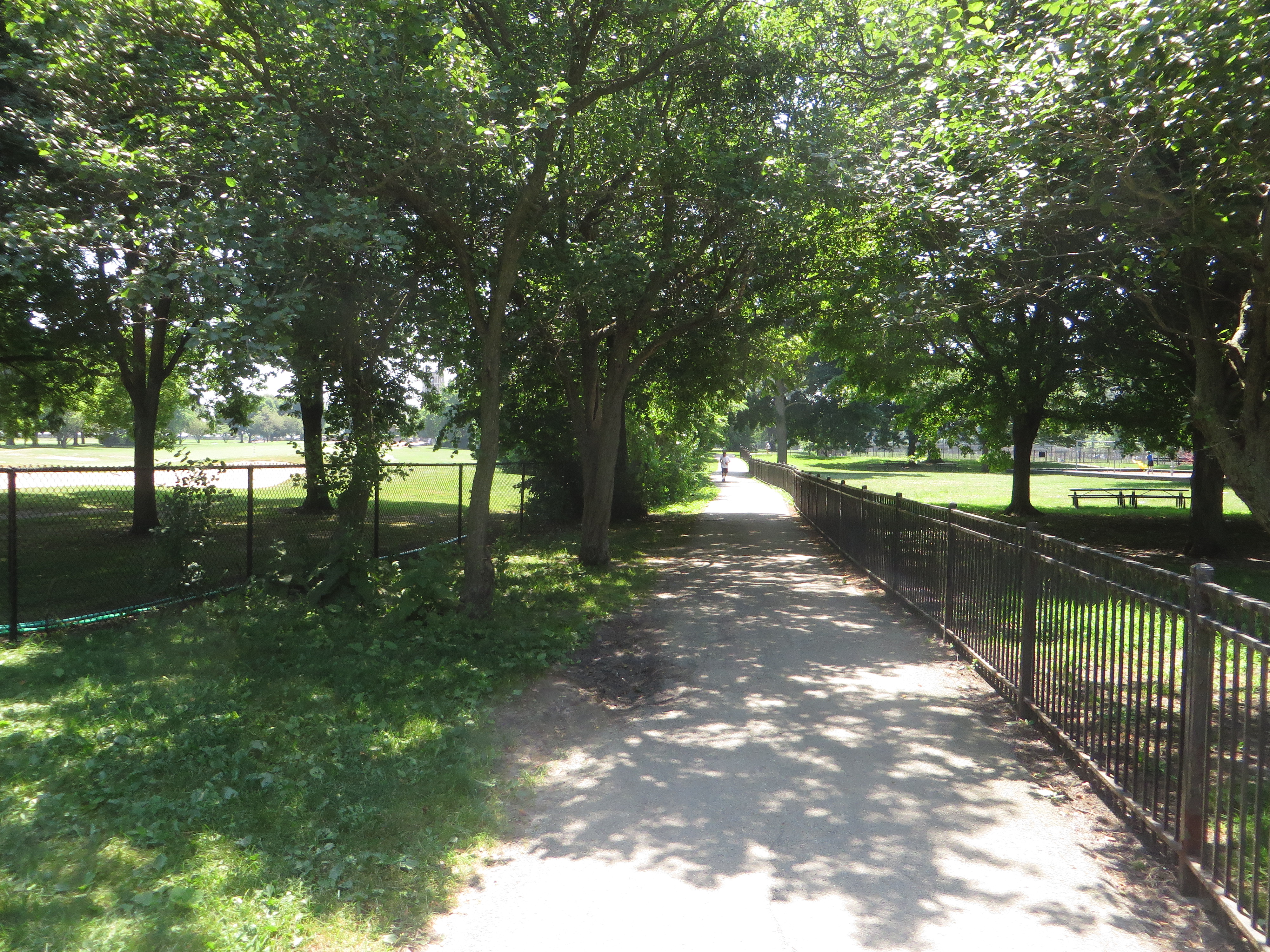
- A 1,208 acre park with a free zoo, a conservatory, beaches, and an 18 mile lakefront trail at the neighborhood's edge.
- Walk Score 94, Transit Score 79, Bike Score 92 (Walk Score, November 3, 2026).
- Downtown Chicago is 5 miles away, 6 minutes by taxi (Rome2Rio, November 3, 2026), served by the Brown, Purple, and Red lines.
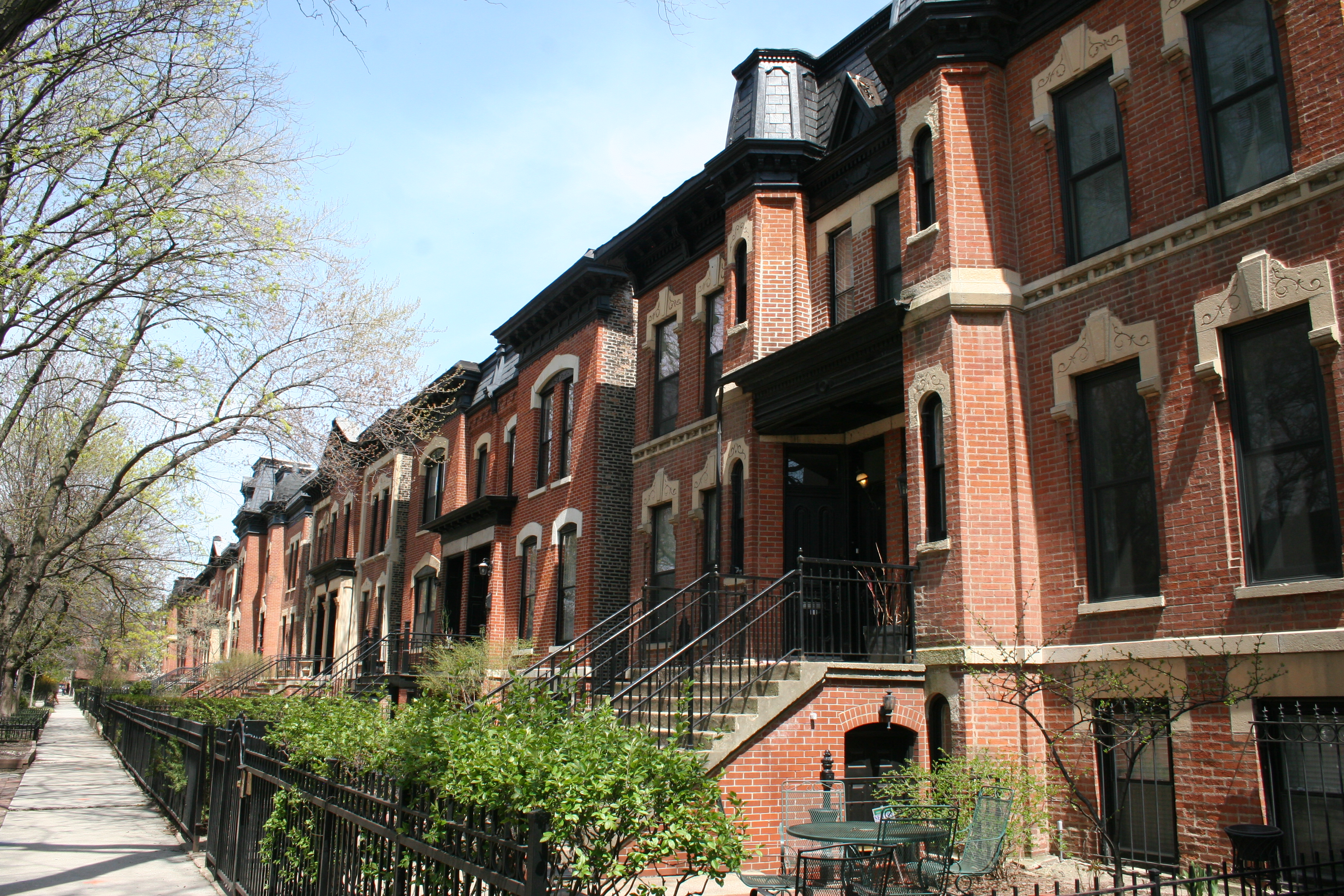
- The stock is genuinely historic: the 1883 Bissell Street District and the Arlington-Deming District, plus greystones and flats across the neighborhood.
Cons
- The price is the barrier: a median sale price of $855,000 for July through September 2026 (MRED, via RELUX), against a Chicago city median of $409,805 (Redfin city guide), and houses alone medians $2,575,000 on 46 sales in the same quarter.
- Property taxes in Illinois run among the highest in the country, about 1.88 percent effective statewide, so the tax bill must be priced with the house.
- Parking and winter lakefront wind are the everyday frictions, and the most desirable blocks near the park carry the highest prices.
Housing in Detail
Entry: the Hampden Court condo, a 1 bed, 1 bath condo at 2754 N Hampden Ct #1207, 750 square feet, listed at $285,000 on November 3, 2026, 5 days on Redfin, built 1973. Mid-low: the Sheffield Avenue condo, a 2 bed, 2 bath condo at 2131 N Sheffield Ave #2, 1,500 square feet, listed at $739,000 on November 3, 2026, 1 day on Redfin, year built not shown on Redfin. Mid-high: the Racine Avenue condo, a 4 bed, 2.5 bath condo at 2653 N Racine Ave #1, 2,600 square feet, listed at $1,549,000 on November 3, 2026, 4 days on Redfin, built 2008. Top: the Orchard Street house, a 6 bed, 6.5 bath single-family house at 1878 N Orchard St, 9,512 square feet, listed at $6,950,000 on November 3, 2026, 111 days on Redfin, built 2018. The shape underneath: 33,772 occupied housing units (CMAP, June 2026, 2020 to 2024 ACS), 44.8 percent owner-occupied and 55.2 percent renter-occupied, in a neighborhood where flats and greystones share blocks with high-rises. The verified market on November 3, 2026 ran from a $285,000 condo to a $6,950,000 house, and the gap between those two numbers is the neighborhood in miniature.
Daily Life
The park does the morning work: the zoo, the Conservatory, the Lily Pool, North Pond, and North Avenue Beach, all inside the 1,208 acre park. Armitage Avenue carries the boutique shopping, Clark Street and Lincoln Avenue carry the everyday restaurants, bars, and shops, and the Clybourn Corridor carries the larger stores. DePaul University sits in the neighborhood, the Chicago History Museum sits at its southern edge, and Steppenwolf Theatre, R.J. Grunts, and the Wieners Circle give the neighborhood its institutions and its late-night stops. The Brown Line at Armitage and Fullerton, the Red Line at Fullerton, and buses including the 22, 36, 73, and 151 keep downtown within a short ride.
Best For / Think Twice If
Best for: buyers who want Chicago's lakefront all-rounder, a free zoo and a conservatory as daily amenities, walkable shopping streets, and a short ride downtown; condo buyers who want a Lincoln Park address at the lower end of the range; and families who value DePaul, the parks, and the neighborhood schools within walking distance.
Think twice if: the $855,000 median strains the plan, because the verified market on November 3, 2026 ran from a $285,000 condo to a $6,950,000 house, with the middle cards at $739,000 and $1,549,000; you need a house rather than a condo, because houses alone medians $2,575,000 in the latest quarter; Illinois property taxes change the math; or a car-free life needs a careful address check, because Transit Score 79 is excellent but not uniform across every block.
Top Properties Right Now
$285,000
2754 N Hampden Ct #1207, Chicago, IL 60614
Condo, built 1973, 1 bed, 1 bath, 750 square feet
The entry card, a condo in the park-side grid, 5 days on Redfin, listed October 29, 2026, and still shown For Sale on November 3, 2026.
Listing verified on Redfin, November 3, 2026. View on Redfin
$739,000
2131 N Sheffield Ave #2, Chicago, IL 60614
Condo, 2 bed, 2 bath, 1,500 square feet
The mid-low card, a condo steps from the Armitage corridor, 1 day on Redfin, listed November 3, 2026.
Listing verified on Redfin, November 3, 2026. View on Redfin
$1,549,000
2653 N Racine Ave #1, Chicago, IL 60614
Condo, built 2008, 4 bed, 2.5 bath, 2,600 square feet
The mid-high card, a large condo in the northern part of the neighborhood, 4 days on Redfin, listed October 30, 2026.
Listing verified on Redfin, November 3, 2026. View on Redfin
$6,950,000
1878 N Orchard St, Chicago, IL 60614
Single-family house, built 2018, 6 bed, 6.5 bath, 9,512 square feet
The top card, a large house in the Arlington-Deming area, 111 days on Redfin, listed July 15, 2026, and still shown For Sale on November 3, 2026.
Listing verified on Redfin, November 3, 2026. View on Redfin
Nearby Alternatives
- Lakeview: north across Diversey Parkway, the same lakefront and L access with a livelier bar and restaurant strip along Belmont and Southport.
- Old Town: south across North Avenue, smaller scale streets and the Wells Street corridor, for buyers who want Lincoln Park's feel closer to downtown.
- Andersonville: further north, a strong independent main street on Clark Street, for buyers who want neighborhood character at a lower entry point.
- Bucktown and Wicker Park: west, for buyers who want a similar vintage stock with a younger, more nightlife-driven main street.
Sources
Data as of the dates shown above. Refresh due within 90 days for listings and 6 months for market data.
- The RELUX Group at Compass, Lincoln Park, Chicago real estate market data, MRED via MLS Grid, closed sales July through September 2026, updated November 3, 2026: median sale price $855,000, up 19 percent year over year, 314 sales; houses 46 sales, median $2,575,000; condos and townhomes 268 sales, median $725,000: thereluxgroup.com
- Redfin, Lincoln Park housing market, August 2026, as reported November 2026: median sale price $894,068, up 24.2 percent year over year: chicagolandbusinessbroker.com
- Redfin, Chicago city guide: Chicago median sale price $409,805, Lincoln Park median $899,748 and Walk Score 94 in its neighborhood table: redfin.com
- Apartments.com, Lincoln Park, Chicago local guide, May 2026: average one-bedroom apartment rent $2,572 per month: apartments.com
- RentLife, Lincoln Park, Chicago neighborhood page, November 3, 2026: Walk Score 94, Transit Score 79, Bike Score 92: rentlife.com
- Chicago Metropolitan Agency for Planning, Lincoln Park Community Data Snapshot, June 2026 release, 2020 to 2024 American Community Survey: 33,772 occupied housing units, 44.8 percent owner-occupied, 55.2 percent renter-occupied, 9.9 percent vacant: cmap.illinois.gov
- Point2Homes, Lincoln Park, Chicago demographics, Census based: 9,866 housing units in its smaller Lincoln Park polygon, 10.6 percent detached single family, 31.1 percent in buildings of 50 or more units, a different polygon than the CMAP community area, not blended with it: point2homes.com
- Rome2Rio, Downtown Chicago to Lincoln Park, November 3, 2026: taxi 5 miles, 6 minutes, $13 to $16; subway 33 minutes, $2 to $5; Line 37 bus 29 minutes, $3; walk 1 hour 10 minutes: rome2rio.com
- City of Chicago, Bissell Street District landmark designation report, designated September 5, 2007, 20 buildings, 1883, Iver C. Zarbell.
- City of Chicago, Arlington-Deming District landmark designation report.
- AARP, Illinois state tax guide, updated March 16, 2026: flat 4.95 percent income tax, retirement income exempt, effective property tax rate 1.88 percent (Tax Foundation).
- Country Tax Calc, Illinois Tax Guide 2026: Chicago combined sales tax about 10.25 percent before a 2026 Cook County transit increase.
- Listings verified November 3, 2026, all on Redfin: 2754 N Hampden Ct #1207, 2131 N Sheffield Ave #2, 2653 N Racine Ave #1, 1878 N Orchard St.
- Thshriver, Bissell Street District, Lincoln Park, Chicago (hero photograph), Wikimedia Commons, CC BY-SA 3.0: commons.wikimedia.org
- IIP Photo Archive, Lincoln Park Conservatory, Chicago (story photograph), Wikimedia Commons, CC BY 2.0: commons.wikimedia.org
- Ken Lund, Chicago Lakefront Trail in Lincoln Park, Chicago (photograph), Wikimedia Commons, CC BY-SA 2.0: commons.wikimedia.org