
Neighborhood Report
Plaza Midwood, Charlotte, North Carolina
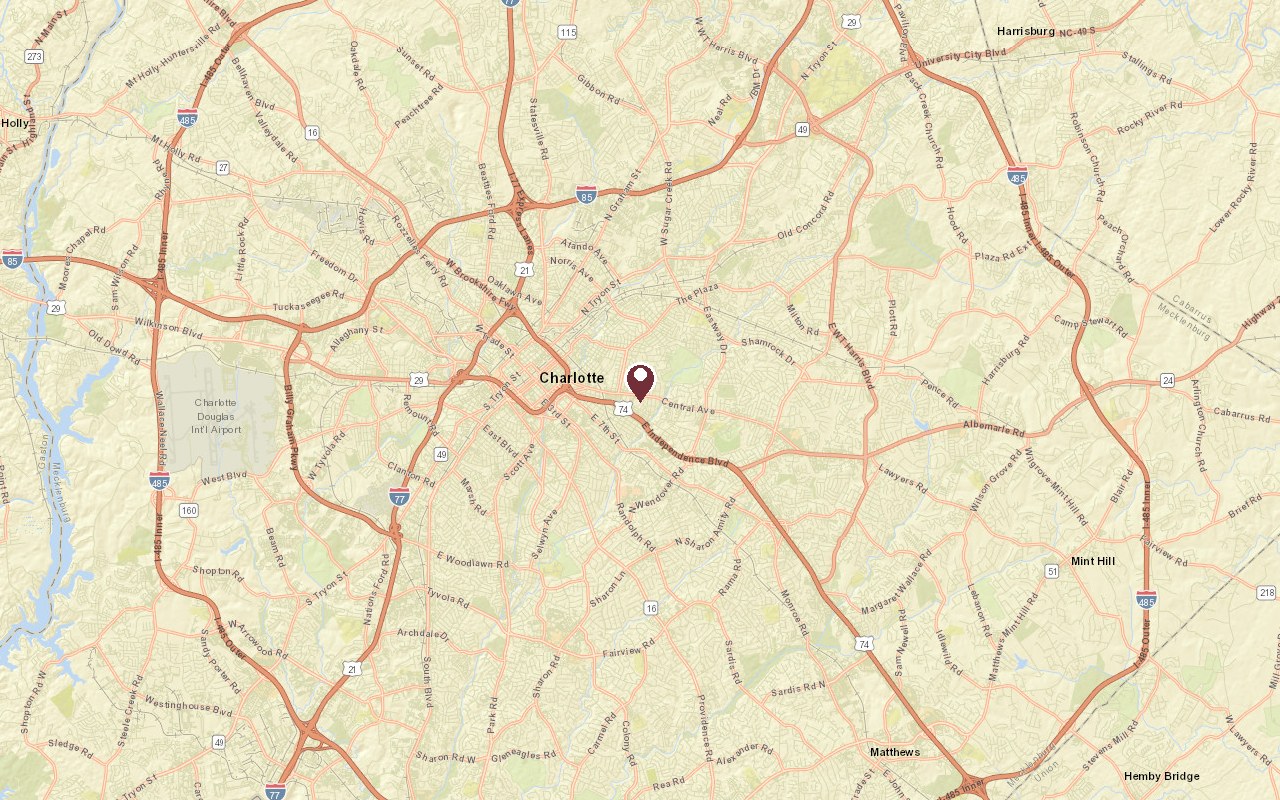
Charlotte's streetcar suburb that kept its patchwork: grand houses, bungalows, Tudor duplexes and a 1928 quadraplex laid out for different wallets on the same oak shaded streets, Central Avenue's independent restaurants and bars a short walk from the porches, and Uptown about two miles away.
The short version
Plaza Midwood, Charlotte
Charlotte's streetcar suburb that kept its patchwork: grand houses, bungalows, Tudor duplexes and a 1928 quadraplex laid out for different wallets on the same oak shaded streets, Central Avenue's independent restaurants and bars a short walk from the porches, and Uptown about two miles away.

At a Glance
North Carolina cost notes. Charlotte and Mecklenburg County property taxes combine to 0.7857 per $100 of assessed value for fiscal 2026-27 (county 0.4927, city 0.2930). North Carolina assesses on the county revaluation cycle rather than at sale, so a buyer inherits the 2023 revaluation basis until the next countywide revaluation, scheduled for 2027; at the full median price the rate math runs about $7,800 a year, and many Plaza Midwood homes currently assess below their sale prices. North Carolina's individual income tax is a flat 3.99 percent for 2026, with no city or county income tax on top. Two first-time buyer specifics: closings run through an attorney in North Carolina, with buyer closing costs typically 2 to 5 percent of the price, and contracts carry a due diligence fee paid to the seller at signing that the seller generally keeps if the buyer walks away during the due diligence period, so it is real money at risk, budgeted separately from earnest money.
The Story
Plaza Midwood began as strawberry fields. Lawyers Road, later Central Avenue, ran along its southern edge, and a dirt farm road cut north through the fields. That farm road became The Plaza, and in 1910 a group of Charlotte businessmen planted the city's first golf course, the Mecklenburg Country Club, on Briar Creek at the road's far end. There was one problem. The club sat about two miles beyond the end of the streetcar line at Hawthorne Lane, and Edward Dilworth Latta, who owned that line, refused to extend it. There was nothing out there, he said, but farmland.
See moreSee less
Textile developer Paul Chatham had land beside the club, so he built a railroad of his own. Partnering with Southern Public Utilities, he ran a streetcar down Central Avenue and up The Plaza toward the clubhouse. Riders from downtown still had to change at Hawthorne Lane to a small battery-powered car, and the Seaboard railroad crossing on Central Avenue delayed them anyway. Wealthy buyers mostly chose Dilworth and Myers Park, with their direct cars. Plaza Midwood filled in slowly instead, as a patchwork. The Oakland Land Company laid out its roads, and in 1912 landscape architect Leigh Colyer gave The Plaza its median and laid out Thomas and Nassau avenues beside it. Chatham Estates put larger houses on The Plaza and more modest ones on the side streets, and Midwood, Club Acres and the rest each drew a different tier of buyer.
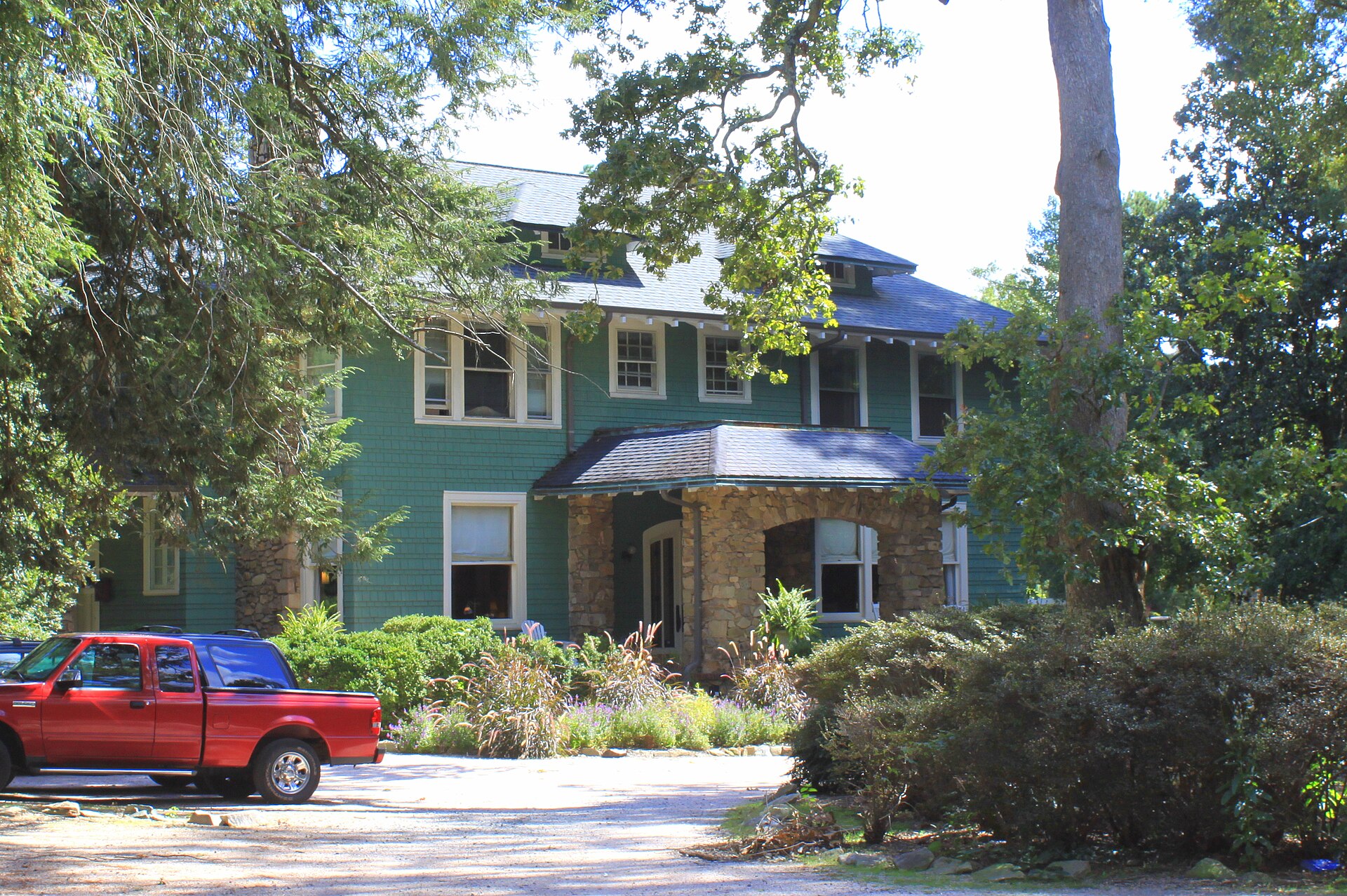
That split still reads in the houses. Cotton broker Ralph VanLandingham built his Arts and Crafts house at 2010 The Plaza in 1913 and 1914, its gardens by Colyer, and Bishop John Kilgo's house went up at 2100 The Plaza in 1915. A few blocks away, Thomas Avenue filled with bungalows, Tudor Revival duplexes so well designed they read as single houses, and in 1928 a four-unit quadraplex whose first tenants included a Ford plant engineer. At 1600 The Plaza stands a Queen Anne house that mule teams hauled from North Tryon Street in 1915. Central Avenue, meanwhile, kept inventing things: Long's Grocery in 1916, radio station WBT growing out of a Club Acres backyard in 1922, the grocery W. T. Harris opened in 1936 on his way to Harris Teeter, and the first Family Dollar in 1959.
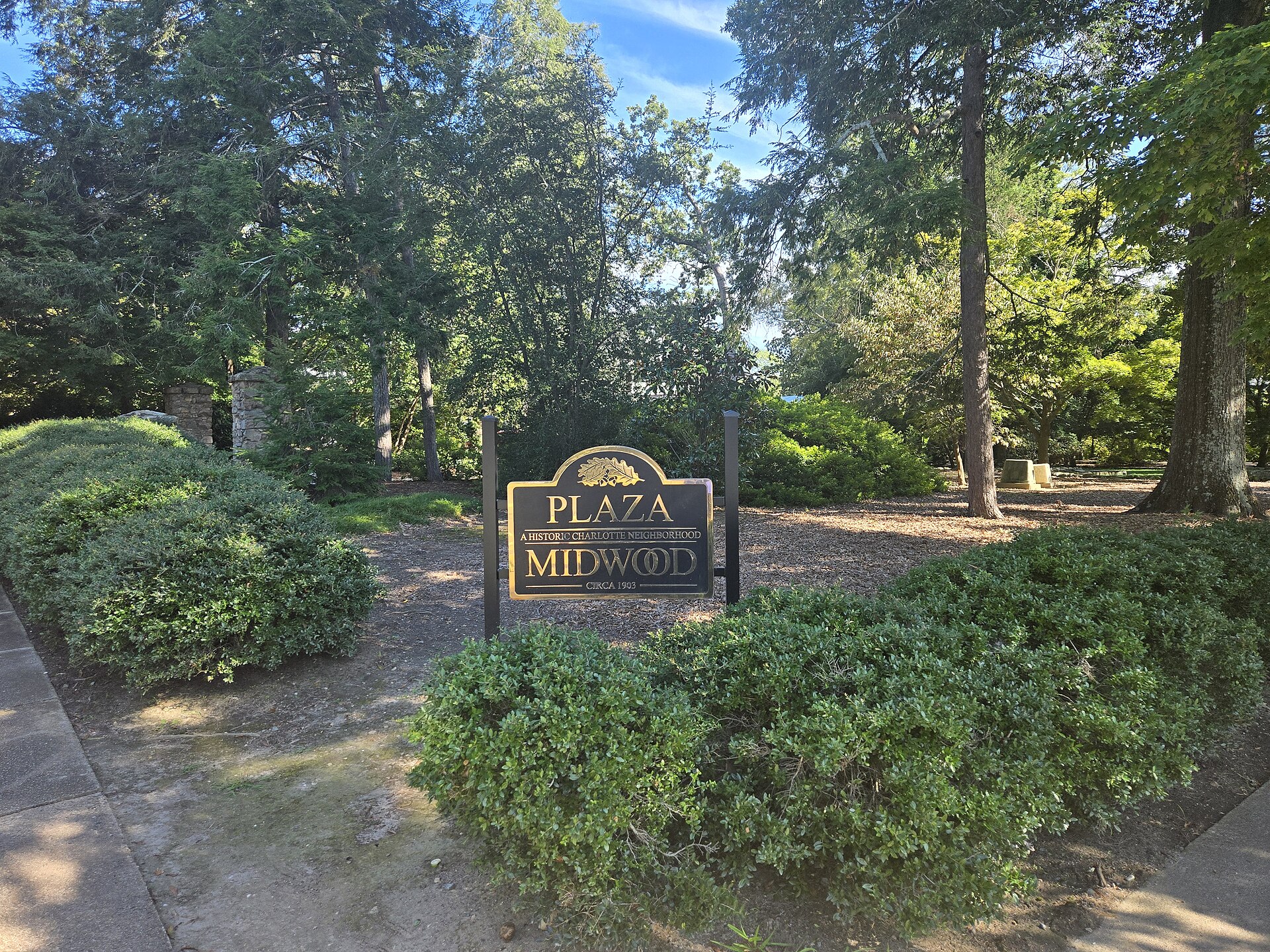
The neighborhood thrived through the Depression, then declined from the 1950s as cars and suburban malls pulled Charlotte outward, and younger, lower-budget residents turned its cheap bungalows into a hub of bars, record stores and vintage shops. Residents answered by becoming a neighborhood on purpose. The ten subdivisions took one name in 1973, combining The Plaza with Midwood. The Plaza Midwood Neighborhood Association formed in 1975, and in 1992 The Plaza, Thomas Avenue and parts of Pecan and Clement avenues became a local historic district. Reinvestment followed from the mid-1990s, turning dilapidated bungalows back into the character homes buyers now line up for.

Timeline
- 1903: First Plaza Midwood blocks are laid out near today's 1501 Central Avenue, the Oakhurst subdivision.
- 1907: Textile manufacturer Paul Chatham moves from Elkin to Charlotte.
- 1910: Businessmen organize the Mecklenburg Country Club, Charlotte's first golf course, on Briar Creek; Chatham joins club members to develop Chatham Estates; the Oakland Land Company lays out the streetcar suburb's roads.
- 1910 to 1912: Latta refuses to extend his streetcar line; Chatham partners with Southern Public Utilities on his own line down Central Avenue and up The Plaza, with a transfer at Hawthorne Lane to a battery-powered car.
- 1912: Leigh Colyer lays out The Plaza with its median, plus the parallel Thomas and Nassau avenues.
- 1913 to 1914: The VanLandingham house is built at 2010 The Plaza, with gardens by Colyer.
- 1915: Ralph VanLandingham moves in at 2010 The Plaza; the 1890s Queen Anne Victoria is hauled by mule teams to 1600 The Plaza; Bishop Kilgo's house is completed at 2100 The Plaza.
- 1916: Long's Grocery opens at 1500 Central Avenue, among the corridor's first commercial buildings.
- 1919: Mecklenburg Realty rescinds Club Acres' one-acre minimum lot rule to attract buyers, and other developers follow.
- 1922: WBT, North Carolina's first commercial radio station, grows out of Fred Laxton's backyard radio experiments in Club Acres.
- 1928: A quadraplex rises at 1716 Thomas Avenue, at the peak of Charlotte's pre-Depression housing bubble.
- 1936: W. T. Harris opens the grocery at 1504 Central Avenue that grows into Harris Teeter.
- 1954: The Penguin drive-in opens on Thomas Avenue, as the neighborhood's postwar decline begins.
- 1959: Leon Levine opens the first Family Dollar at 1510 Central Avenue.
- 1973: Ten subdivisions become one named neighborhood, Plaza Midwood.
- 1975: The Plaza Midwood Neighborhood Association is established to protect and preserve the neighborhood.
- 1992: The Plaza, Thomas Avenue and parts of Pecan and Clement avenues are designated a local historic district.
- Mid-1990s: Reinvestment transforms dilapidated homes and the comeback begins.
What It Actually Feels Like
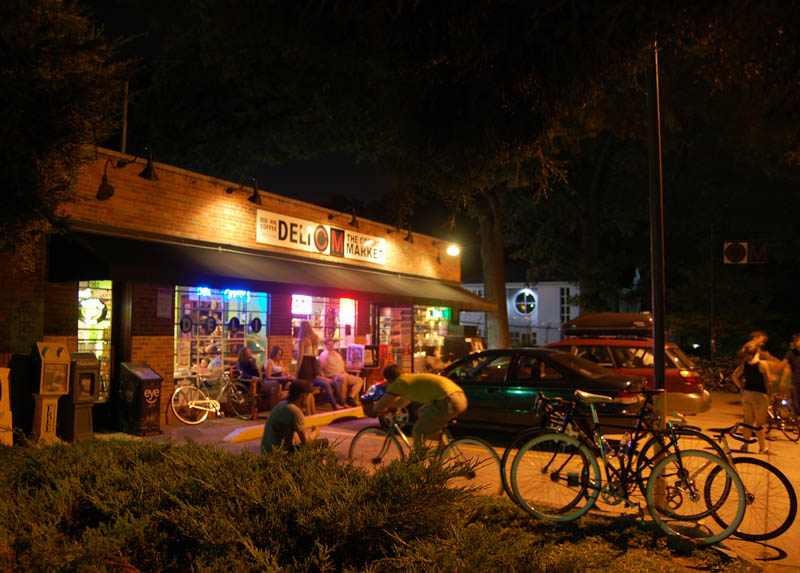
Mornings belong to the porches. The Plaza runs wide and oak shaded past the grand houses and the bungalow rows, Thomas Avenue wakes up slower behind it, and the walk to coffee on Central Avenue is the day's first errand and its first pleasure. Midday, the side streets mix everything the subdivisions left behind: a Tudor duplex beside a renovated bungalow beside a new townhome row, garden flags and band posters in the windows. Evenings gather on Central and Commonwealth, at the Common Market's benches, the tavern patios on Thomas Street, the Penguin's old corner and the brewery taps, and the neighborhood's social district lets a drink travel between patios. It feels like Charlotte's front porch, a place that decided its mix of people and houses was the point, and then organized to keep it that way.

Pros and Cons
Pros
- Character with paperwork: a 1992 local historic district on The Plaza, Thomas Avenue and parts of Pecan and Clement, inside a neighborhood whose subdivisions were deliberately built at different price tiers.
- A real first-time buyer ladder, if a narrower one than the guides suggest: Homes.com counts a $425,000 median two bedroom sale over the last 12 months, and townhomes and condos trade under the single-family stock on the same streets.
- A balanced market to negotiate in: September 2026 sales closed at 99.97 percent of asking with a median 61 days on market (Houzeo, Canopy MLS), and North Carolina's due diligence period gives a buyer a defined window to inspect before the fee is spent.
- The shortest suburban commute in Charlotte: about 2 miles to Uptown, about 7 minutes by car, with the Gold Line streetcar every 20 minutes from Sunnyside Avenue.
- A main street that is still independent: Central Avenue's restaurants, bars, vintage shops and groceries are local businesses, many of them decades old.
Cons
- The headline median has outrun the angle: $992,500 in September 2026 (Houzeo, Canopy MLS), and no in-neighborhood listing under $600,000 could be verified active on Redfin or Realtor on October 22, 2026; the verified floor was $694,900.
- The portals argue with each other: Houzeo counts the median down 7.46 percent year over year while Homes.com counts its trailing figure up 11 percent, because the mix of bungalows, infill and condos closing in any window moves the number more than prices do.
- Walkability is two neighborhoods in one: a Walk Score of 46 across the whole neighborhood against 84 at 1320 The Plaza, so the walkable life has to be bought block by block.
- Historic district rules and 1920s systems: the best character streets come with design review, old wiring and plumbing, and renovation budgets that belong in the purchase math.
- The due diligence fee is at risk from day one: in North Carolina the seller generally keeps it if the buyer terminates, which punishes a first-time buyer who waives inspections to win a bidding war.
Housing in Detail
Entry: the condos and townhomes under the single-family stock, where Homes.com counts a median two bedroom sale of $425,000 over the last 12 months and a three-story townhome at 704 Lamar Avenue, at the neighborhood's Elizabeth edge, listed at $694,900 in October 2026. Mid: the smaller bungalows and newer duets on the side streets, where a new construction Craftsman style duet off The Plaza at 1524 East 35th Street listed at $735,000 and a four bedroom house at 2103 Sablewood Drive listed at $764,000. Top: the historic core, where a brick cottage at 1922 Club Road listed at $875,000 the day this report published, single-family only medians run at $1,005,000 over the trailing 12 months on local sold data, and the grand houses on The Plaza trade well above that. Renting is the other half of the stock, 57.5 percent of occupied homes, in everything from the 1928 Thomas Avenue quadraplex to the new apartment buildings on Central Avenue.
Daily Life
Central Avenue is the living room: coffee on the avenue, groceries at the Harris Teeter that grew up on this street, dinner and drinks from Supperland to the tavern patios on Thomas Street, and vintage and record shopping in between. The Common Market on Commonwealth Avenue works as the neighborhood's front porch, deli, bottle shop and bench scene in one. Midwood Park and Veterans Park cover the ordinary green needs, the Little Sugar Creek Greenway runs along the east edge for bikes and runs, and the Plaza Midwood Library sits on Central Avenue. The calendar runs on neighborhood fuel: a Saturday farmers market, Porchfest turning front porches into stages, gallery crawls and the fall festival season, all of it organized by the association that has been running since 1975.
Best For / Think Twice If
Best for: first-time buyers who want a house with a past and are willing to shop the townhome, condo and small bungalow rungs to get one; buyers who value a walkable main street and a two mile Uptown commute over square footage; anyone who wants their street to mix incomes and house types the way this one was built to; renovators who can carry a 1920s house and its systems.
Think twice if: your budget needs a single-family bungalow under $600,000 inside the neighborhood, because none could be verified for sale here in October 2026; you want a uniformly walkable daily round, because the neighborhood Walk Score is 46 and the walkable core is a few blocks, not the whole map; historic district design review and at-risk due diligence money are deal breakers; you need new construction systems and a warranty at a starter price.
Top Properties Right Now
$694,900
704 Lamar Avenue, Charlotte
3 bed | 3.5 bath | 2,190 square feet | Townhome, built 2015
The verified entry point: a three-story townhome with a finished basement at the neighborhood's Elizabeth edge, 28 days on Redfin and carrying $392 a month in HOA dues; the listing description counts a fourth bedroom at the basement level.
Listing verified on Redfin, October 22, 2026. View on Redfin
$735,000
1524 East 35th Street, Charlotte
3 bed | 2.5 bath | Townhome (duet), built 2026
New construction in a Craftsman style shell just off The Plaza, per the listing description, with a two car garage; the listing frames it between Plaza Midwood and NoDa at the neighborhood's north edge.
Listing verified on Redfin, October 22, 2026. View on Redfin
$764,000
2103 Sablewood Drive, Charlotte
4 bed | 2.5 bath | 2,126 square feet | Single-family home, built 1997
The family-size card: four bedrooms upstairs, hardwood floors on both levels, a corner lot near Belvedere Avenue, carrying $13 a month in HOA dues, listing updated October 17, 2026.
Listing verified on Redfin, October 22, 2026. View on Redfin
$875,000
1922 Club Road, Charlotte
3 bed | 2 bath | 1,376 square feet | Brick single-family home, built 1945 per public record, renovated 2000
The character card, listed the same day this report published: a brick cottage on one of Midwood's most beloved streets, with hardwood floors, a gas fireplace and a kitchen with painted checkered floors.
Listing verified on Redfin, October 22, 2026. View on Redfin
Nearby Alternatives
- Belmont: west toward Uptown, a historic mill neighborhood with its own restaurant row and generally lower prices.
- Villa Heights and NoDa: north across The Plaza, where the arts district around North Davidson Street trades some polish for lower entry prices.
- Chantilly and Elizabeth: south across Central Avenue, quieter and more polished, with the Gold Line at their edge and Elizabeth's own historic streets.
- Commonwealth and Country Club Heights: east along Central Avenue, the same streetcar-era stock at the neighborhood's gentler edge.
Sources
Data as of the dates shown above. Refresh due within 90 days for listings and 6 months for market data.
- Houzeo, Plaza Midwood housing market, September 2026, from Canopy MLS data: median sale price $992,500, down 7.46% year over year; 43 homes sold; median 61 days on market; sale to list 99.97%; 3.5 months of supply: houzeo.com
- Homes.com, Plaza Midwood neighborhood and local guide, October 2026: median sale price $950,804, up 11%, trailing 12 months; median two bedroom sale price $425,000; median single-family sale price $955,000: homes.com
- The Laws Collective, Plaza Midwood home prices analysis, 2026: single-family only median $1,005,000 and $474 per square foot, trailing 12 months to August 2026, on local sold data; the three-product mix explanation: thelawscollective.com
- Apartments.com, Plaza Midwood local guide, April 2026: average apartment rent, one bedroom $1,513 per month, two bedrooms $1,965, studio $1,273; average apartment rent down 2.2% in the past year: apartments.com
- Zumper, Plaza Midwood rent research, October 2026: median rent $1,797 per month across all listings and property types, on 14 listings, flagged limited data on the page: zumper.com
- Walk Score via Homes.com, Plaza Midwood neighborhood: Walk Score 46, Transit Score 40, Bike Score 43: homes.com
- Walk Score via LoopNet, 1320 The Plaza, Charlotte: Walk Score 84: loopnet.com
- Point2Homes, Plaza Midwood demographics, tabulating the U.S. Census Bureau American Community Survey 2019-2023 (2,318 housing units; 49.9% one-unit detached; 42.5% owner occupied and 57.5% renter occupied; median year built 1972; 18.4% built before 1950; median gross rent $1,460; 94.7% of workers commute by car): point2homes.com
- The Laws Collective, Plaza Midwood neighborhood guide, October 2026: about 2 miles east of Uptown Charlotte; neighborhood boundaries Hawthorne Lane, The Plaza, Briar Creek Road and Central Avenue: thelawscollective.com
- SellYourHomeCharlotte, Plaza Midwood guide, July 2025: Uptown commute 2 miles, about 7 minutes by car: sellyourhomecharlotte.com
- Charlotte Area Transit System, CityLYNX Gold Line: streetcar every 20 minutes, 5 a.m. to 2 a.m., from Sunnyside Avenue station into Uptown; station opened August 30, 2021: wikipedia.org
- Mecklenburg County and City of Charlotte tax rate charts, fiscal 2026-27: county 0.4927 and city 0.2930 per $100 of assessed value, combined 0.7857; North Carolina Department of Revenue, individual income tax flat rate 3.99% for tax year 2026, via Deel's North Carolina payroll tax guide: deel.com
- The Charlotte Ledger, The Many Lives of Plaza Midwood, September 12, 2026: the Latta refusal, Chatham's rival streetcar and battery car transfer, the subdivision patchwork, Long's Grocery, WBT and the first Family Dollar: thecharlotteledger.com
- History South, Tom Hanchett, Plaza Midwood Historic District Walking Tour, updated April 2023: The Plaza laid out in 1912 by Leigh Colyer, the VanLandingham and Kilgo houses, the Victoria's 1915 move, Bungalow Row and the 1928 Thomas Avenue quadraplex: historysouth.org
- Charlotte-Mecklenburg Historic Landmarks Commission, Victor Shaw House and Bishop Kilgo House reports: Club Acres and the Mecklenburg Realty Company, the separate trolley line and transfer, Chatham Estates in 1910, and the neighborhood created in 1973: landmarkscommission.org
- National Register of Historic Places: VanLandingham Estate, listed October 13, 1983; Bishop Kilgo House, listed January 22, 2009.
- Listings verified October 22, 2026: 704 Lamar Avenue, 1524 East 35th Street, 2103 Sablewood Drive and 1922 Club Road (Redfin, Canopy MLS).
- RoxylovesHistory, VanLandingham Estate (hero photograph), Wikimedia Commons, CC BY-SA 4.0: commons.wikimedia.org
- City Dweller 2, Plaza Midwood sign at Belvedere Avenue and The Plaza (story photograph), Wikimedia Commons, CC BY-SA 4.0: commons.wikimedia.org
- James Willamor, The Common Market, Plaza Midwood (photograph), Wikimedia Commons, CC BY-SA 3.0: commons.wikimedia.org