
Neighborhood Report
Montrose, Houston, Texas
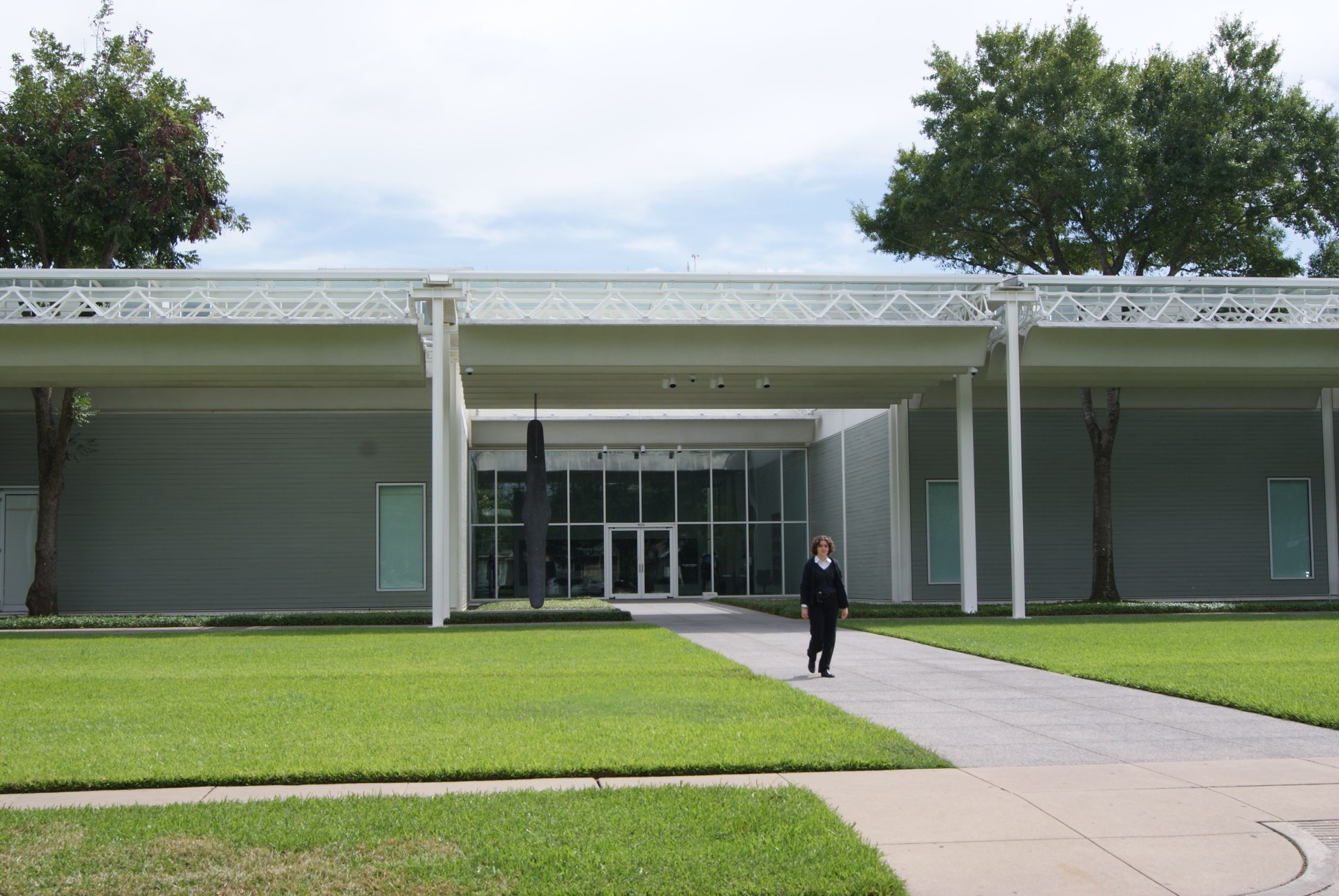
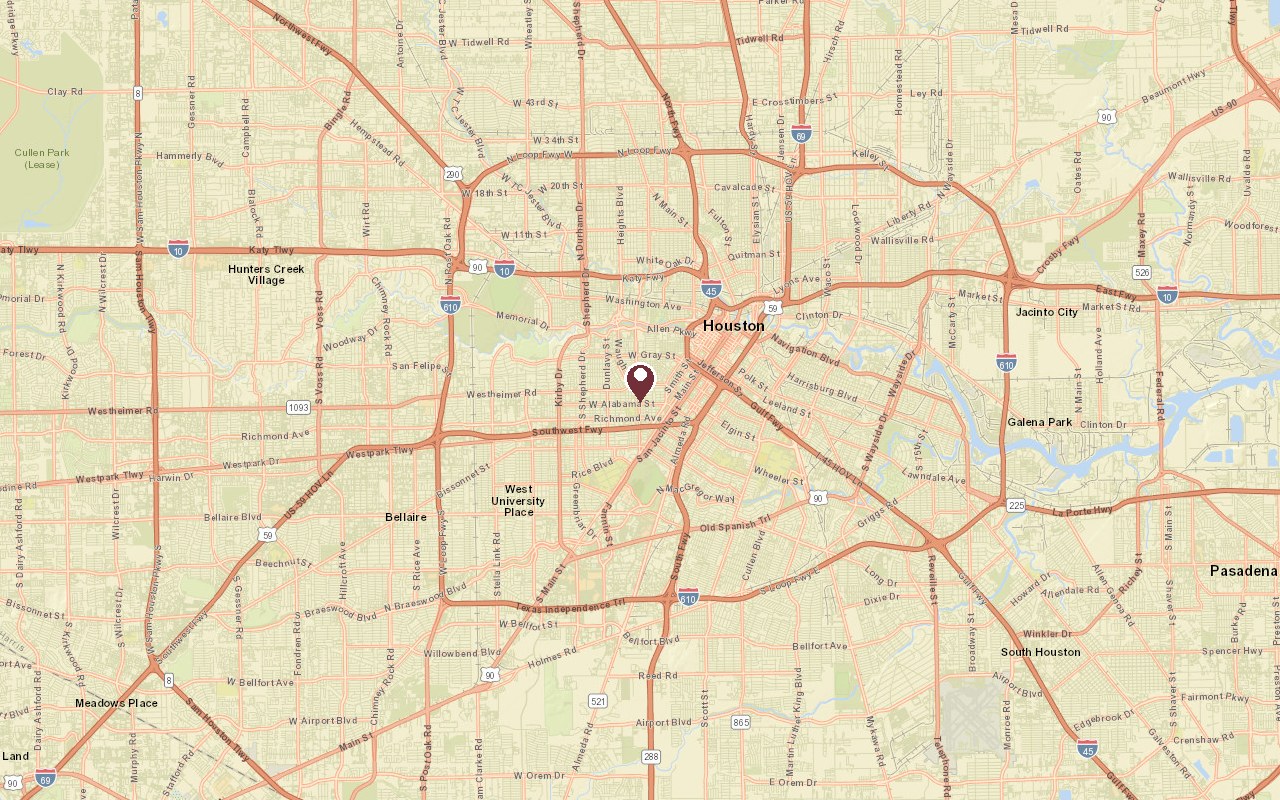
A 1911 garden suburb that became Houston's cultural core: boulevards of mansions and gray bungalows around the Menil Collection and the Rothko Chapel, Westheimer's restaurants, bars and shops running through the middle of it, and downtown Houston about two miles east.
The short version
Montrose, Houston
A 1911 garden suburb that became Houston's cultural core: boulevards of mansions and gray bungalows around the Menil Collection and the Rothko Chapel, Westheimer's restaurants, bars and shops running through the middle of it, and downtown Houston about two miles east.

At a Glance
Texas cost notes. Texas levies no state income tax, and property tax carries the load instead. The combined sales tax in Houston is 8.25 percent, the 6.25 percent state rate plus 1 percent for the City of Houston and 1 percent for METRO. The tax year 2025 property tax stack on a Montrose home runs about $2.13 per $100 of taxable value across eight taxing entities, including Houston ISD at $0.8783, the City of Houston at $0.519190 and Harris County at $0.380960, and Harris County's median property tax bill runs about $3,916 a year. Homestead appraisals are capped at 10 percent growth a year and the school homestead exemption stands at $140,000.
The Story
Montrose began as a sales pitch on open prairie. In 1911 the Houston Land Corporation, owned by John Wiley Link, platted what the City of Houston calls the first large-scale, restricted planned subdivision in Houston, on a 3,370-acre tract. Link platted more than 1,000 lots and spent more than $1,000,000 on streets, utilities and other improvements. The plan was boulevards first: Lovett, Montrose, Yoakum and Audubon Place, wide streets with esplanades, mansions facing the green, and cross streets priced for middle-class families.
See moreSee less
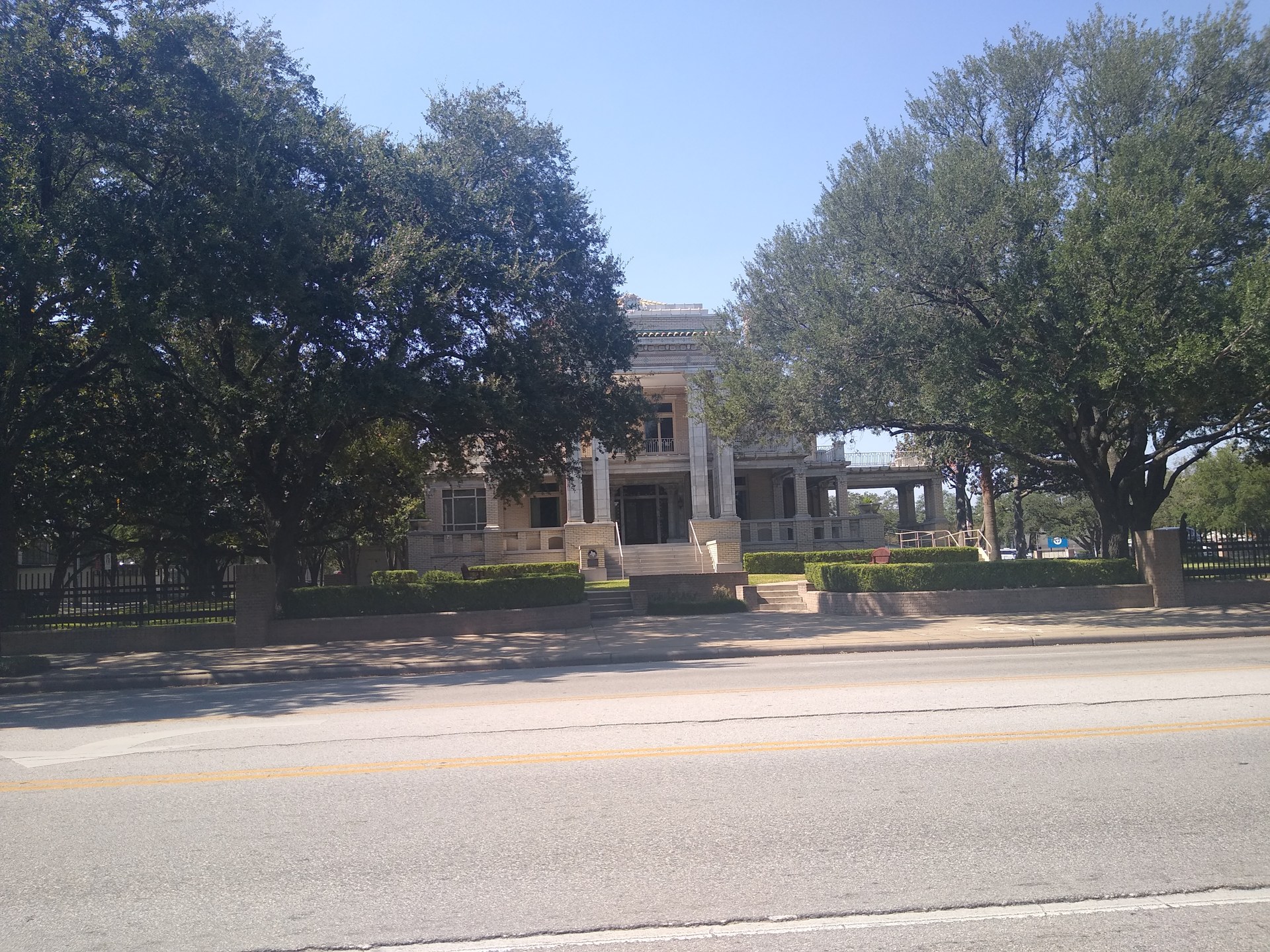
Link built the showpiece himself. His mansion at 3800 Montrose Boulevard, was completed in 1912 as the first house in the addition. He sold it in 1916 to oilman Thomas P. Lee for $90,000. That house, the Link-Lee Mansion, later became the first home of the University of St. Thomas in 1947 and still anchors the boulevard. The streetcar made the suburb work: the Montrose line began service to downtown in August 1912, and Houston streetcars ran until 1937.
After World War II the pitch inverted. The City of Houston's history notes decline beginning in the mid-1940s: families moved to new suburbs and mansions came down. Cheap, handsome old houses near downtown were exactly what a different Houston needed. By the late 1960s and early 1970s Montrose had become the place gays, bohemians, artists and hippies called home, with gay bars, tattoo parlors and music venues among the older homes. By 1985 the flavor and politics of the neighborhood were heavily influenced by its LGBTQ community.
John and Dominique de Menil reshaped Montrose deliberately. The French couple moved to Houston in 1941, founded the Menil Foundation in 1954, and commissioned Mark Rothko in 1964 for a nondenominational chapel. Rothko completed his 14 paintings in 1967 and died in 1970, never seeing the building. The Rothko Chapel opened in February 1971, with Barnett Newman's Broken Obelisk, dedicated to Dr. Martin Luther King Jr., on its plaza. Dominique, after John's death in 1973, carried their museum to completion: the Menil Collection, designed by Renzo Piano to blend with the gray bungalows the Foundation had bought around it. It opened to the public on June 7, 1987, free of charge, and it remains free.
Preservation and pressure have run together since. Audubon Place residents reinstated deed restrictions in 1995; First Montrose Commons became Houston's 16th historic district on June 9, 2010,. Outside the districts, Houston's no-zoning pattern and Inner Loop demand replace bungalows with four story townhomes: townhouses were more than 27 percent of new housing units built inside the Loop since 2005, in a 2021 Kinder Institute count. After Hurricane Harvey in August 2017, the Montrose Center's relief fund had by November 2017 raised $1,269,680 and signed up 1,038 clients.

Timeline
- 1911: Montrose is platted by the Houston Land Corporation; the City of Houston calls it the city's first large-scale, restricted planned subdivision, with more than 1,000 lots and more than $1,000,000 in improvements.
- 1912: The Link-Lee Mansion is completed at 3800 Montrose Boulevard, the first house in the addition; in August the Montrose streetcar line begins service to downtown.
- 1916: John Wiley Link sells his mansion to oilman Thomas P. Lee for $90,000.
- 1937: Houston streetcar service ends.
- September 22, 1947: The University of St. Thomas, chartered April 28, 1947, holds its first classes, with the Link-Lee Mansion as its first home.
- 1954: John and Dominique de Menil found the Menil Foundation.
- 1964 to 1967: The de Menils commission Mark Rothko in 1964; he completes the chapel's 14 paintings in 1967 and dies in 1970 without seeing the building.
- February 1971: The Rothko Chapel opens, with Broken Obelisk on its plaza, dedicated to Dr. Martin Luther King Jr.
- June 7, 1987: The Menil Collection, designed by Renzo Piano, opens to the public, free of charge.
- June 9, 2010: First Montrose Commons is designated Houston's 16th historic district; Audubon Place follows in June 2011.
- August to November 2017: After Hurricane Harvey, the Montrose Center's LGBTQ Disaster Relief Fund raises $1,269,680 by November 2017, with 1,038 clients signed up for support.
What It Actually Feels Like
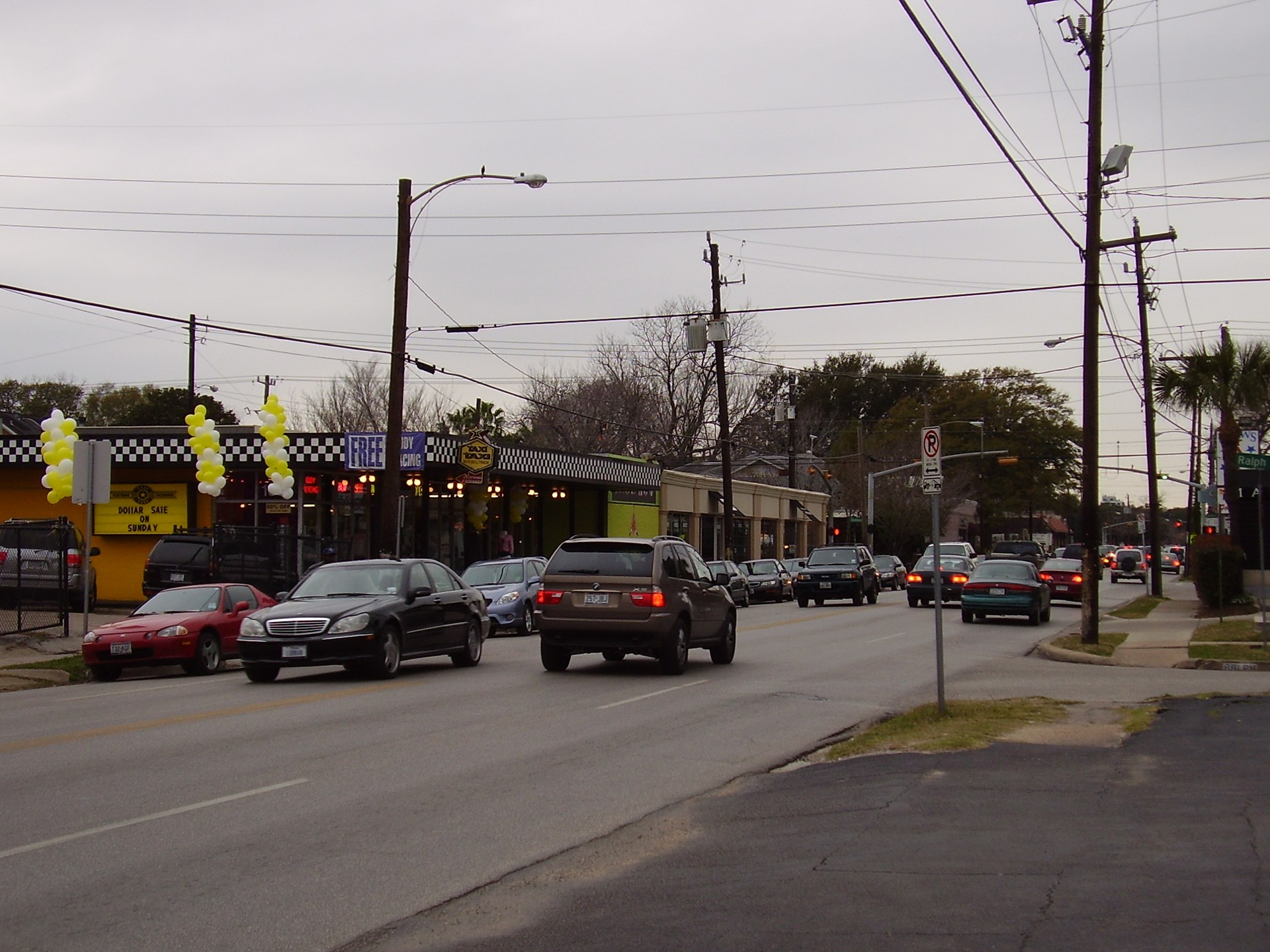
Westheimer sets the tempo. The 1600 block runs antique shops, restaurants, bars and storefronts under the live oaks, and the side streets behind it go quiet within a block: bungalows with deep porches, garden apartments, a mansion behind a hedge, then a row of new townhomes where a bungalow stood. North of West Gray the boulevards take over, Montrose and Yoakum running wide and green toward Buffalo Bayou, and at the neighborhood's quiet western edge the Menil campus spreads its lawns between gray bungalows the museum foundation painted to match, with the chapel a short walk away and students from the University of St. Thomas crossing between them. Evenings belong to the restaurant patios and the bars that made Montrose Houston's LGBTQ center, mornings to coffee shops full of laptops and dog walkers on the esplanades. It feels like the one Houston neighborhood that was drawn as a suburb and grew into a city center anyway, layered rather than planned all at once, and comfortable being several places at the same address.

Pros and Cons
Pros
- Culture that most cities put downtown: the Menil Collection and the Rothko Chapel are free, walkable from much of the neighborhood, and sit in residential streets among the houses.
- A real walkable core in a car city: Walk Score 92 at 1410 West Gray Street, with restaurants, groceries and bars along Westheimer and West Gray.
- Housing range in one grid: verified listings on October 19, 2026 ran from a $235,000 condo to a $1,035,000 townhome, with a 1920 house at $550,000 between them.
- Renting is a genuine way in: an average one bedroom apartment rent of $1,472 a month (Apartments.com, October 2026) in a neighborhood where 64.7 percent of occupied homes are rented.
- Downtown without the downtown address: about two miles, frequent buses, and no state income tax anywhere in Texas.
Cons
- The name hides two markets: Redfin's Neartown / Montrose median was $775,000 in September 2026 while its separate Montrose geography, heavy with condos, showed $445,000 in February 2026, so a budget built on the wrong geography collapses on contact.
- Protection is patchwork: historic districts and deed restrictions guard some blocks, and on the next block a bungalow can become four townhomes, because Houston has no zoning.
- Houses sit: the Neartown / Montrose median days on market reached 66 in September 2026, up 31 days year over year (Redfin), which cuts both ways for buyers and sellers.
- Property tax is the second mortgage payment in Texas: about $2.13 per $100 across the eight taxing entities, on Inner Loop values.
- No rail line of its own, Houston heat for much of the year, and flood risk that varies street by street in a bayou city: Harvey's relief fund numbers came from this neighborhood's own center.
Housing in Detail
Entry: the condo stock along Shepherd Drive and in the older mid-rises, where a one bedroom condo at 1601 South Shepherd Drive listed at $235,000 and a two bedroom condo at 612 Fargo Street listed at $325,000 in October 2026, the Fargo unit carrying 112 days on Redfin, which tells its own negotiating story. Mid: the bungalow and early house streets, where a 1920 single family house at 4418 Stanford Street listed at $550,000, close to Redfin's Neartown / Montrose median sale price of $775,000 for September 2026 once the townhome sales are counted. Top: the new townhome rows and the boulevard houses, where a four story townhome at 1331 Peden Street, built in 2020, listed at $1,035,000. Renting clusters in the garden apartments and the newer apartment blocks across the neighborhood, with an average one bedroom apartment rent of $1,472 a month (Apartments.com, October 2026) and renters in 64.7 percent of occupied homes.
Daily Life
Westheimer and West Gray carry the daily round: groceries at the Kroger on West Gray and the H-E-B a short drive north, bookshops and record stores along the Westheimer curve, and cafes that double as offices. The Menil campus lawns work as the neighborhood park, Buffalo Bayou's trails run along the northern edge, and the University of St. Thomas adds students, lectures and a chapel of its own. The Montrose Center on Branard Street runs health, counseling and community programs from the neighborhood that built it. Weekends split between the museum lawns, patio lunches that stretch, and the short hop into downtown for the theater district and the ballpark. Nightlife lives on the same streets, later.
Best For / Think Twice If
Best for: buyers who want Houston's arts, food and LGBTQ center as their daily neighborhood; downtown and Texas Medical Center workers who want a two mile commute with a bike option; renters who want a walkable core in a driving city; anyone who values an old house with a story and accepts the maintenance that comes with a 1920s bungalow.
Think twice if: your budget was built on the $445,000 Montrose only median and your target is a house on the boulevards, which trade in the $775,000 geography; you need a rail commute from your front door, since the Red Line stops outside Montrose; you want new subdivision predictability, because the no-zoning mix means the lot next door can change use; you have yet to price the property tax and a flood quote on the specific street, which in Houston are part of the purchase.
Top Properties Right Now
$235,000
1601 South Shepherd Drive Unit 113, Houston
1 bed | 1 bath | Condo, built 1978
The entry rung at the neighborhood’s western edge: a first floor one bedroom in the River Oaks Gardens condos, carrying a $580 monthly HOA.
Listing verified on Redfin, October 19, 2026. View on Redfin
$325,000
612 Fargo Street Unit 612, Houston
2 bed | 2.5 bath | 1,122 square feet | Condo, built 1984
A two story condo in the core with a $789 monthly HOA and 112 days on Redfin, the set’s clearest negotiating opening.
Listing verified on Redfin, October 19, 2026. View on Redfin
$550,000
4418 Stanford Street, Houston
3 bed | 2.5 bath | 2,406 square feet | Single family house, built 1920 | 5,000 square foot lot
The historic slot: a one story 1920 house on a tree lined core street, listed by CB&A Realtors.
Listing verified on Redfin, October 19, 2026. View on Redfin
$1,035,000
1331 Peden Street, Houston
3 bed | 3.5 bath | 3,228 square feet | Townhome, built 2020
The top of the set: a gated four story townhome with an elevator to all floors near the River Oaks shopping district, updated on Redfin on October 18, 2026, with a $125 monthly HOA.
Listing verified on Redfin, October 19, 2026. View on Redfin
Nearby Alternatives
- Museum District: immediately south across the Southwest Freeway, with Hermann Park, Rice University and the museum campus, quieter and more institutional in feel.
- Midtown: east toward downtown, denser and newer, with the METRORail Red Line running through it and apartment living as the default.
- The Heights: north across Buffalo Bayou, Houston's other historic streetcar suburb, with Heights Boulevard's esplanade, bungalows and a more family first pace.
- River Oaks: west along the bayou, Houston's grandest mansion district, a clear step up in price for a similar vintage of house.
Sources
Data as of the dates shown above. Refresh due within 90 days for listings and 6 months for market data.
- Redfin, Neartown / Montrose housing market page, median sale price $775,000 and year change down 4.2%, median days on market 66 and sale to list 96.6%, September 2026; Redfin, Montrose geography housing market page, median sale price $445,000, February 2026 (a condo and co-op weighted geography, published in this report as the second geography).
- Apartments.com, Montrose rental market trends, average one-bedroom apartment rent $1,472 per month and average apartment rent $1,801 per month, October 2026: apartments.com
- Walk Score, 1410 West Gray Street, Houston (Walk Score 92, Transit Score 54, Bike Score 84); Walk Score via RentCafe, Neartown / Montrose neighborhood (Walk Score 68, Transit Score 46, Bike Score 71).
- Rome2Rio, Montrose to Downtown Houston, about 2 miles, about 8 minutes by car, buses about 18 to 23 minutes, October 2026.
- Point2Homes, Neartown / Montrose housing, tabulating the U.S. Census Bureau American Community Survey 2024 (units in structures of 20 or more units 20.5 percent; one unit structures about 31.8 percent; renter occupied 64.7 percent).
- Texas Comptroller and City of Houston (no state personal income tax; Houston combined sales tax 8.25 percent); tax year 2025 property tax rates compiled from Texas Comptroller data (City of Houston $0.519190, Harris County $0.380960, Houston ISD $0.878300 per $100; eight-entity total about $2.1252 per $100); Harris County median property tax bill about $3,916 (Ownwell).
- City of Houston Historic Preservation Manual, Audubon Place Historic District history (1911 platting, 3,370 acres, more than 1,000 lots, Link-Lee Mansion 1912 and sale 1916, Montrose streetcar August 1912, mid-1940s decline, 1995 deed restrictions): houstontx.gov
- City of Houston, First Montrose Commons historic district designation, June 9, 2010: houstontx.gov
- Texas State Historical Association Handbook, Menil Collection (the de Menils moved to Houston in 1941; the museum opened to the public June 7, 1987; the Renzo Piano building and the gray bungalows): tshaonline.org
- Rothko Chapel fact sheet (Menil Foundation founded 1954, Rothko commissioned 1964, paintings completed 1967, chapel opened February 1971, Broken Obelisk dedicated to Dr. Martin Luther King Jr.): rothkochapel.org
- Texas State Historical Association Handbook, John Wiley Link: tshaonline.org
- Houston Press, The Changing Face of Houston, The Montrose Then and Now (the late 1960s and early 1970s transition): houstonpress.com
- Houstonia, June 2024, detached townhouses in Houston, citing a 2021 Kinder Institute report (townhouses more than 27 percent of new housing units inside Loop 610 since 2005): houstoniamag.com
- The Montrose Center, Hurricane Harvey Update, November 2017 ($1,269,680 raised, 1,038 clients): montrosecenter.org
- Listings verified on Redfin, October 19, 2026: 1601 South Shepherd Drive Unit 113; 612 Fargo Street Unit 612; 4418 Stanford Street; 1331 Peden Street (links on the cards above).
- Jacklee, The Menil Collection in Montrose, Houston (hero photograph), Wikimedia Commons, CC BY-SA 3.0: commons.wikimedia.org
- WhisperToMe, Link-Lee House in Montrose, Houston (story photograph), Wikimedia Commons, CC0: commons.wikimedia.org
- WhisperToMe, Westheimer Road at Dunlavy Street in Montrose, Houston (photograph), Wikimedia Commons, public domain: commons.wikimedia.org